Create a sustainable future

The core investment casting advantages of investment casting (lost-wax casting) that distinguish it from other casting processes such as sand casting, shell molding, and die casting lie in high precision, complex forming capability, and excellent surface finish, along with good adaptability to high-difficulty materials. Its specific characteristics are clearly summarized as follows, including key differences often discussed in die casting vs investment casting comparisons.
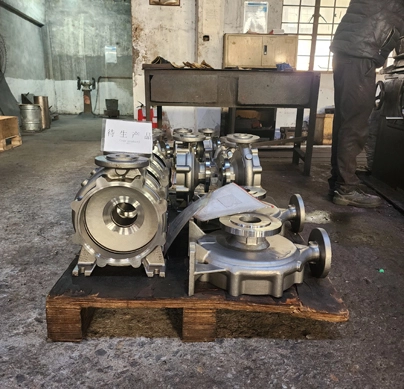
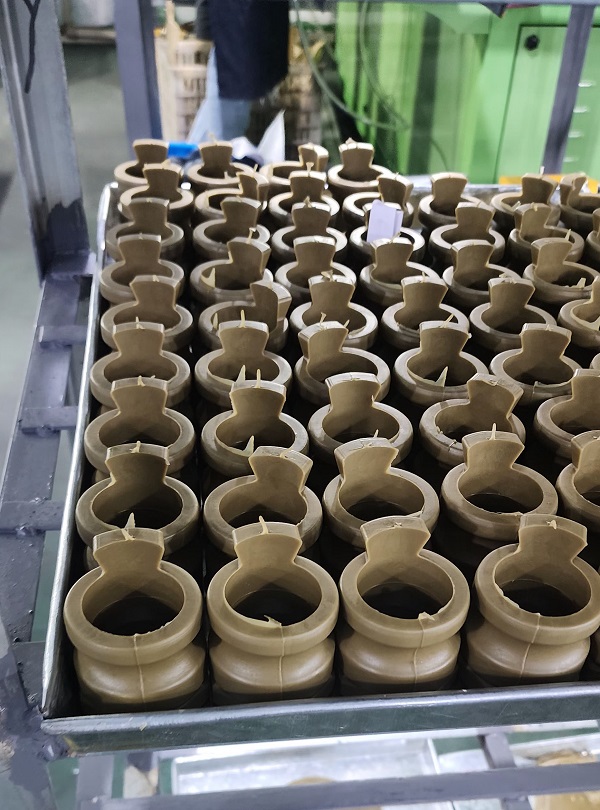
• It can directly replicate complex details such as fine holes (minimum φ1~2mm), deep cavities, interleaved curved surfaces, and tiny grooves through wax patterns, demonstrating the major advantages of casting process for complex components. It can even achieve integral forming of internal flow channels and bionic structures without splitting or subsequent splicing.
• Traditional sand casting and shell molding are limited by parting surfaces and cavity filling, making it difficult to achieve high-density complex features and prone to incomplete forming.
• Dimensional tolerance can be controlled within ±0.1~0.3mm, geometric tolerance ≤0.02mm, and the dimensional consistency deviation of small and medium-sized parts in batch production does not exceed 0.05mm—far higher than sand casting (±1~3mm) and shell molding (±0.5~1mm).
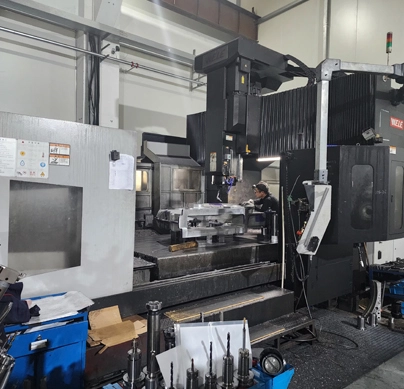
• The split-free design completely eliminates flash and mold misalignment defects, reducing subsequent machining allowance by more than 70%. Some parts can be directly used for assembly.
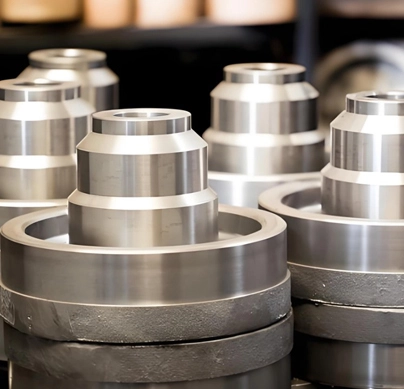
• The surface roughness of castings is low (Ra1.6~6.3μm), smooth without sand holes or sand inclusion, equivalent to the finish milling level of mechanical processing, and no extensive grinding or polishing is required.
• Traditional processes have rough surfaces (sand casting: Ra12.5~25μm; shell molding: Ra6.3~12.5μm) and are prone to residual impurities, resulting in high subsequent processing costs. These differences highlight the benefits of investment casting in reducing finishing requirements.
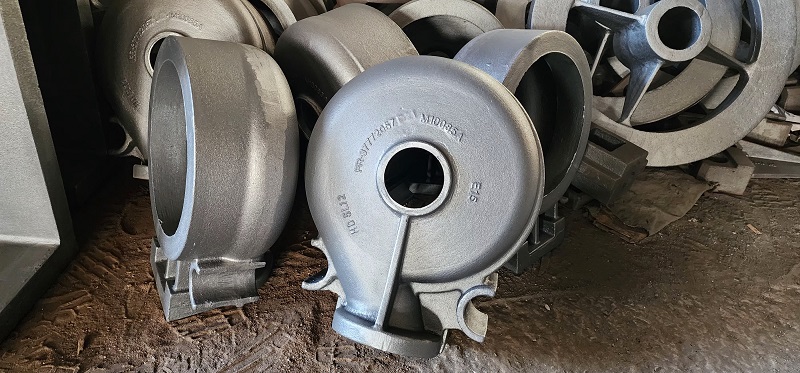
• The ceramic shell has high temperature resistance (≤1600℃) and good air permeability, which can handle materials with high melting points (≥1450℃) and low fluidity such as stainless steel, superalloys, and titanium alloys. These investment casting material properties make it suitable for demanding industrial applications.
• The shells of sand casting and shell molding have weak high-temperature resistance and compatibility, which easily lead to a sharp increase in the defect rate of high-alloy castings.
• The wax pattern mold has low modification cost and short cycle, adapting to product iteration; the scrap rate during batch production is ≤3%, much lower than sand casting (8%~12%).
• The wax recovery rate is ≥90%, and the molten metal loss rate is only 10%~15%, with material utilization far higher than traditional processes.
In short, the core of investment casting lies in solving the pain points of traditional casting—"unable to make complex parts, unable to make precision parts accurately, and unable to make difficult-to-process materials well"—through "precision replication + high-quality shell", making it the preferred process for high-end precision parts. Understanding both the advantages and disadvantages of investment casting helps manufacturers select the right process for different applications.
If want to know about investment casting, click here https://www.balasen.com/products/low-temperature-wax-casting/
 Materials for Lost Wax CastingNovember 27, 2025The art of lost wax investment casting stands as a cornerstone in the production of intricate metal components. Central to this process is the creation of molds that can precisely capture the fine det...view
 The Evolution of Modern Casting: From Traditional Techniques to Smart FoundriesNovember 12, 2025In recent decades, the global metal casting industry has witnessed an impressive technological transformation. Once reliant on manual labor and experience-based intuition, foundries today are becoming...view
 What Are the Disadvantages of Lost Foam Casting?March 27, 2026Lost foam casting is widely recognized for its ability to produce complex shapes with high precision, but like any manufacturing method, it also has limitations. One of the main drawbacks is the relat...view
 Is Lost Foam Casting Better Than Sand Casting for Agricultural Machinery?June 20, 2025When manufacturing components for agricultural machinery casting, choosing the right casting method is critical for balancing cost, quality, and performance. Lost foam casting and custom sand castings...view
 Precision Manufacturing for High-Strength ComponentsAugust 5, 2025In the world of industrial manufacturing, precision and durability are essential for critical components. Close die forging stands out as a premier manufacturing process for creating high-performance ...view
 Grey Iron for Casting: Properties and UsesNovember 27, 2025Gray iron is a widely used material in the metal casting industry, renowned for its excellent castability, machinability, and cost-effectiveness. As an essential part of custom metal casting and gray ...view
 +86-18816569813
  EN
EN