Create a sustainable future

Stainless steel casting is a highly regarded manufacturing process used to create intricate and durable components. This process is crucial in industries where strength, corrosion resistance, and the ability to withstand extreme conditions are required. Understanding the quality of cast stainless steel is essential for choosing the right material for various applications, including automotive, aerospace, and construction. This article explores the strength and durability of cast stainless steel, its corrosion resistance, a comparison with wrought steel, testing methods to ensure quality, and its diverse applications. Whether you're involved in investment casting services or researching CNC solutions, this comprehensive guide provides valuable insights.
The strength and durability of cast stainless steel are paramount in many engineering applications. This material is known for its ability to withstand high stress without deformation. Unlike other metals, cast stainless steel features a homogenous composition of lost wax investment casting that contributes to its robustness. When compared to ductile iron and gray iron casting, cast stainless steel offers superior mechanical properties.
Material | Tensile Strength | Durability |
Cast Stainless Steel | 485-620 MPa | High |
Ductile Iron | 414 MPa | Moderate |
Gray Iron | 276 MPa | Low |
Additionally, cast stainless steel is often chosen for parts undergoing CNC milling turning processes due to its toughness. It's important to consider the application requirements and choose the material that best suits the CNC machining cost and performance needs.
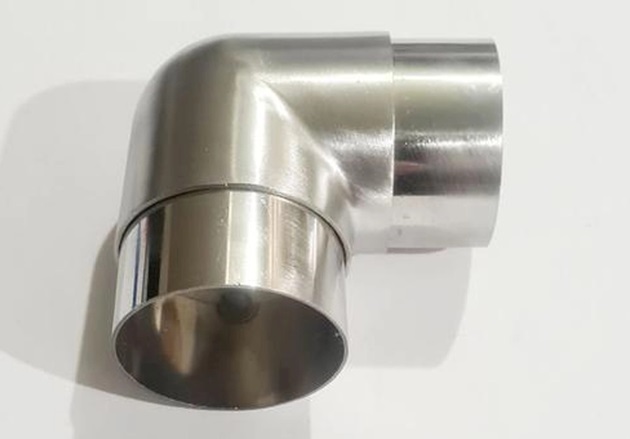
One of the significant advantages of cast stainless steel is its excellent corrosion resistance. This makes it suitable for use in harsh environments where other metals would degrade over time. For instance, stainless steel casting is often employed in marine applications where resistance to saltwater corrosion is crucial.
Environment | Material Performance |
Marine | Excellent with stainless steel casting |
Chemical Exposure | Superior due to high corrosion resistance |
High Humidity | Maintains integrity |
The addition of chromium in cast stainless steel plays a pivotal role in providing a passive layer that shields the material from corrosive elements. This differs significantly from carbon steel casting, which lacks such protective qualities.
While wrought steel and cast stainless steel share similarities, several key differences influence their suitability for various applications. Wrought steel is known for its ductility and is often formed using open die forging or CNC turning parts. In contrast, cast stainless steel is advantageous for creating complex shapes with minimal material waste, such as custom metal casting.
Considering the CNC machining price, cast stainless steel can be more cost-effective due to its versatility in producing intricate designs. However, if flexibility and formability are the primary concerns, wrought steel might be the better choice. Evaluating the specific needs of CNC drilling and other machining processes is crucial when selecting the appropriate material.
Ensuring the quality of cast stainless steel involves rigorous testing methods to confirm its properties. Non-destructive testing (NDT) is widely used to detect internal imperfections without damaging the component. Techniques such as ultrasonic testing and radiography are common for quality assurance in the casting industry.
For manufacturers offering investment casting services, maintaining consistent quality through regular testing is vital. Mechanical tests, including tensile, impact, and hardness testing, are essential to assess strength and durability. The CNC turned parts undergo these tests to comply with industry standards, ensuring reliability and performance.
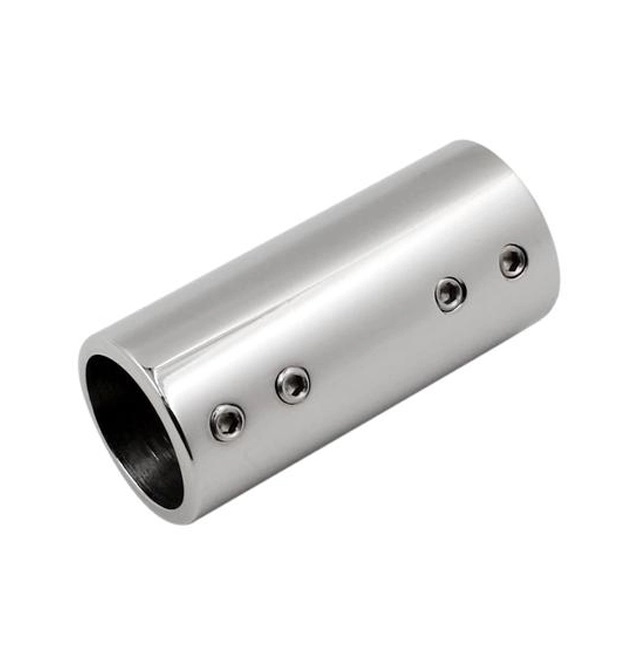
Cast stainless steel finds applications across numerous industries, thanks to its desirable properties. In automotive castings, it is used for demanding engine components. The material's ability to withstand heat and corrosion makes it ideal for the production of components like cast iron water pump and cast iron butterfly valves.
In the construction sector, stainless steel investment casting ensures long-lasting and sturdy structural elements. Similarly, the mining casting industry benefits from its robustness and anti-corrosive nature, which are critical under harsh operational conditions.
Furthermore, advancements in technology have facilitated the integration of 4 axis CNC mill and 3 axis mill systems in manufacturing processes, maximizing efficiency and precision in utilizing foam for lost foam casting and shell casting techniques.
The quality of cast stainless steel significantly impacts the performance and lifespan of components in various industries. From ensuring structural integrity in tough environments to enabling the manufacture of complex parts, this material offers numerous advantages. As demands for durability and efficiency rise, especially in CNC machining solutions, cast stainless steel continues to be a preferred choice due to its unmatched properties.
For industries aiming to enhance their manufacturing processes, understanding the benefits of cast stainless steel and its applications ensures better-informed decisions. Whether it's aluminum casting, copper foundry, or copper for casting, leveraging the strengths of cast stainless steel enhances product quality and operational outcomes.
References:
 How Power Casting Works in Manufacturing?November 27, 2025Power casting is a transformative manufacturing technique that plays a critical role in producing metal components for various industries. This process leverages the principles of lost wax investment ...view
 What Are the Disadvantages of Lost Foam Casting?March 27, 2026Lost foam casting is widely recognized for its ability to produce complex shapes with high precision, but like any manufacturing method, it also has limitations. One of the main drawbacks is the relat...view
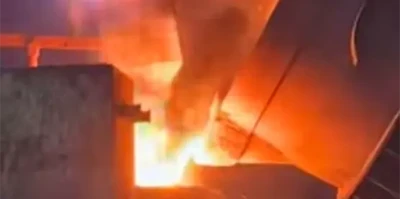 The Evolution of Modern Casting: From Traditional Techniques to Smart FoundriesNovember 12, 2025In recent decades, the global metal casting industry has witnessed an impressive technological transformation. Once reliant on manual labor and experience-based intuition, foundries today are becoming...view
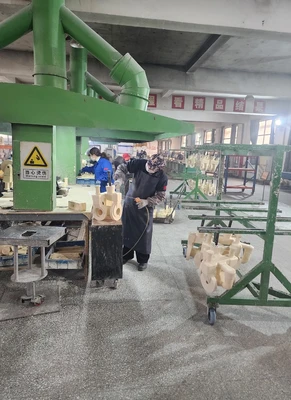 What Are the Differences Between Resin Sand Casting and Green Sand Casting?June 20, 2025Choosing the right casting method is crucial for producing high-quality metal components, especially for industries like agriculture. Resin sand casting and green sand casting are two widely used tech...view
 Grey Iron for Casting: Properties and UsesNovember 27, 2025Gray iron is a widely used material in the metal casting industry, renowned for its excellent castability, machinability, and cost-effectiveness. As an essential part of custom metal casting and gray ...viewWhat Is Lost Foam Casting?March 27, 2026Lost foam casting is a modern metal casting method widely used in industries that require high precision and complex geometries. In this process, a foam pattern—typically made from expanded polystyre...view
 +86-18816569813
  EN
EN