Create a sustainable future
In the world of industrial manufacturing, precision and durability are essential for critical components. Close die forging stands out as a premier manufacturing process for creating high-performance parts with superior mechanical properties. As an experienced manufacturer specializing in forging solutions, Balasen delivers precision-engineered forged components that meet global standards such as EN and ISO. This article explores what close die forging entails, how it compares to open die forging, its critical role in producing strong parts like crankshafts, key applications across industries, and ways to enhance forged component performance.
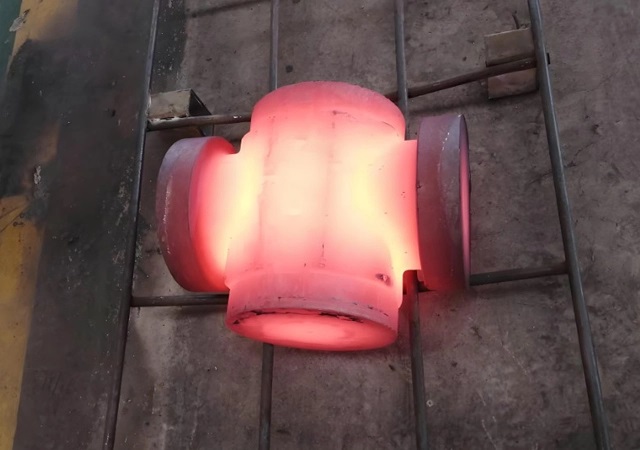
Close die forging is a metal forming process where heated metal is pressed into a precisely machined die cavity to create a near-net-shape component. Unlike open die forging, where the metal is shaped between flat dies, close die forging uses custom dies that enclose the workpiece, allowing for tighter tolerances and complex geometries. The process involves multiple forging stages—blocking, edging, and finishing—each refining the part's dimensions while improving grain flow and strength. At Balasen, our expertise in close die forging ensures parts with excellent fatigue resistance and mechanical integrity, making them ideal for critical applications in demanding industries.
Factor | Close Die Forging | Open Die Forging |
Precision | High, with tight tolerances | Lower, requiring additional machining |
Material Efficiency | Optimized (less waste) | Higher material removal typically needed |
Complexity | Suitable for intricate shapes | Limited to simpler geometries |
Strength & Grain Flow | Superior, due to controlled deformation | Depends on post-processing |
Balasen helps clients choose the right forging method based on their production volume, part complexity, and cost considerations, ensuring optimal performance for each application.
Crankshafts in automotive and heavy machinery applications demand exceptional strength and fatigue resistance. Close die forging is ideal for producing these critical components because it enhances metal grain structure, making forged crankshafts significantly stronger than cast or machined alternatives. The controlled deformation in close die forging eliminates weak points like porosity and inclusions, resulting in a more durable part capable of withstanding high stress. At Balasen, our close die forging process ensures crankshafts meet strict industry standards while optimizing mechanical properties through precision die design and controlled deformation.
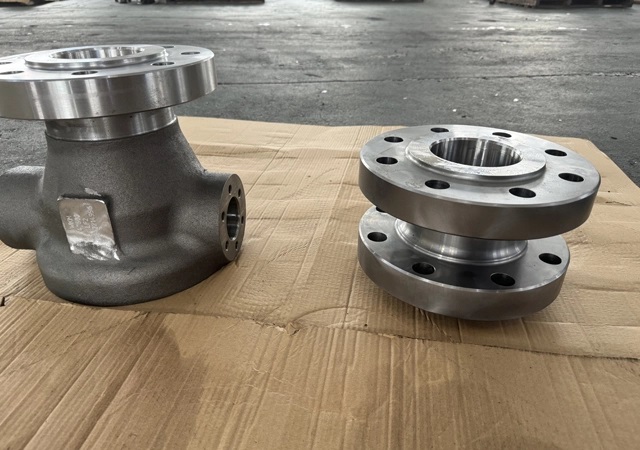
Close die forging is widely used in industries requiring high-strength, wear-resistant parts. In aerospace, it produces landing gear components, turbine disks, and engine mounts. The automotive sector relies on close die forging for transmission gears, connecting rods, and drivetrain parts due to its ability to withstand cyclic loads. Heavy machinery and oil & gas industries also benefit from forged components in valves, flanges, and drilling equipment, where reliability is critical. By partnering with Balasen, clients gain access to high-quality close die forged parts that meet global specifications for performance and durability.
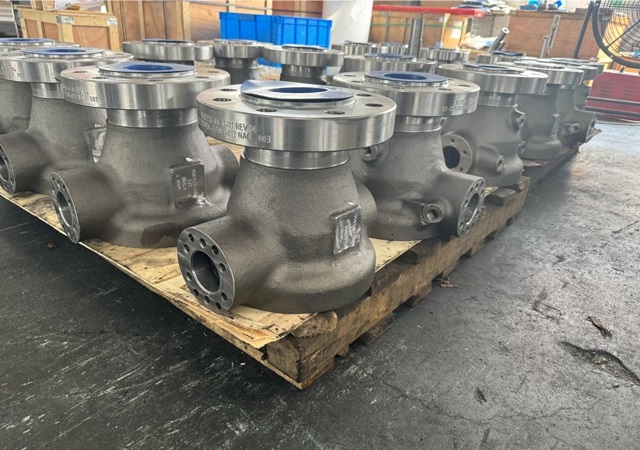
Several key factors determine the final quality of close die forged parts. Heat treatment is crucial—proper annealing, quenching, and tempering refine microstructure and improve toughness. Die design optimization minimizes flash and ensures uniform material flow, preventing defects. Additionally, stringent quality control measures, including non-destructive testing (NDT), verify internal integrity before delivery. Balasen follows these best practices to ensure every forged component exceeds industry expectations for strength, fatigue resistance, and dimensional accuracy.
Close die forging remains a vital manufacturing process for high-performance industrial components, offering unmatched strength and precision compared to alternative methods. With expertise in close die forging, Balasen supplies durable, high-quality parts across aerospace, automotive, and heavy machinery sectors. Our commitment to fast response, strict quality control, and customer-focused solutions ensures that clients receive optimized forged components tailored to their specifications. To explore our forging capabilities, visit Balasen's Close Die Forging page today.
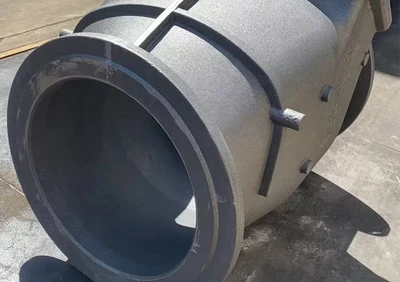 Pump Shell-Ductile IronFebruary 27, 2025This is a great ductile iron part named pump shell used for pump industry area.Balasen designed advanced pouring system to feed and float into the mold cavity.We have opened pouring system deployment,...view
 The Aluminum Shift: How China’s NEV Boom Is Transforming Auto ComponentsJune 20, 2025In China’s booming new energy vehicle (NEV) market, a pivotal transformation is reshaping automotive manufacturing: the widespread shift from cast iron to aluminum castings. As NEVs lead sales and gr...viewHow to Choose a Metal Casting Foundry: RFQ and Supplier Evaluation ChecklistAugust 24, 2026Choosing a metal casting foundry is a technical sourcing decision, not simply a comparison of quoted unit prices. A supplier may offer the requested alloy yet lack experience with the part's wall ...viewWhat Are the Disadvantages of Lost Foam Casting?March 27, 2026Lost foam casting is widely recognized for its ability to produce complex shapes with high precision, but like any manufacturing method, it also has limitations. One of the main drawbacks is the relat...view
 Manganese Steel Casting: The Ultimate Wear-Resistant Solution By BalasenAugust 5, 2025In heavy industries where extreme wear and impact resistance are critical, manganese steel casting has become the material of choice for durable components. As a professional manufacturer with extensi...viewWhat Materials Can Be Used in Lost Foam Casting?March 27, 2026Lost foam casting is valued in modern manufacturing for its flexibility in handling a wide range of ferrous and non-ferrous alloys. This versatility allows engineers to select materials based on mecha...view
 +86-18816569813
  EN
EN