Create a sustainable future
In heavy industries where extreme wear and impact resistance are critical, manganese steel casting has become the material of choice for durable components. As a professional manufacturer with extensive expertise in casting and forging, Balasen delivers high-performance manganese steel castings that meet global EN and ISO standards. This guide explores why manganese steel excels in harsh environments, how it compares to chrome steel, its advantages in mining and construction, best practices for production, and the role of heat treatment in maximizing performance.
Manganese steel casting, also known as Hadfield steel, is renowned for its exceptional toughness, work-hardening properties, and impact resistance. Unlike conventional steels, manganese steel (typically containing 11-14% manganese) becomes harder under repeated impact, making it perfect for crusher liners, bulldozer blades, and rail track components. The material's ability to absorb energy without fracturing ensures longevity even in the most abrasive conditions. Balasen leverages advanced manganese steel casting techniques to produce components that withstand extreme stress while maintaining structural integrity, backed by stringent quality control for client-specific applications.
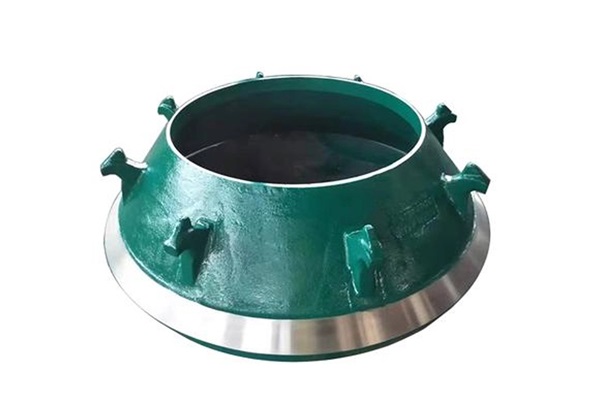
When selecting materials for high-wear applications, the choice between manganese steel casting and chrome steel depends on specific operational needs. Manganese steel is favored for high-impact environments, where its work-hardening capability provides superior long-term resistance to deformation. In contrast, chrome steel offers higher initial hardness and is often used in sliding or rolling wear scenarios. However, compared to chrome steel, manganese steel exhibits better ductility and crack resistance, making it less prone to sudden failure under heavy loads. A key benefit of manganese steel casting, also known as mn steel casting in industrial applications, is its ability to repair minor surface damage through continued hardening, extending service life—an advantage particularly valuable in mining and quarrying. At Balasen, we help clients choose the best alloy composition based on load conditions, impact frequency, and budget considerations to optimize performance.
Industries such as mining, construction, and cement production rely on manganese steel casting for critical wear parts due to its unmatched durability. Crusher jaws, impact plates, and shovel teeth made from manganese steel, as typical high manganese steel casting parts, retain their strength even after prolonged use, reducing downtime and replacement costs. Unlike standard steels, which degrade quickly in abrasive environments, manganese steel develops a hardened surface layer that continuously strengthens under impact, prolonging part lifespan. Additionally, manganese steel's shock-absorbing properties minimize machinery vibrations, reducing structural fatigue. Balasen works closely with global clients as leading mining casting manufacturers to manufacture custom manganese steel components that enhance efficiency in operations where cost-per-ton and equipment longevity are decisive factors.
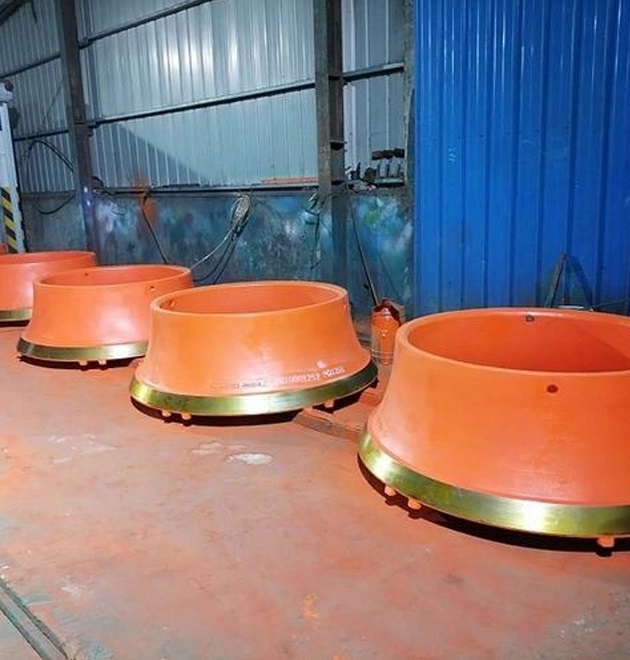
To achieve optimal results with manganese steel casting, precise control of alloy composition, melting, and casting techniques is essential. The molten metal must be uniformly mixed to maintain the 11-14% manganese content, as deviations can compromise strength and work-hardening capabilities. Proper gating and riser design prevent casting defects such as shrinkage porosity, ensuring structural soundness in critical areas. Post-casting, controlled cooling rates help prevent brittleness, while non-destructive testing (NDT) methods like ultrasonic and magnetic particle inspection verify internal integrity. As a professional manganese steel foundry, Balasen's commitment to fast response and quality-driven manufacturing ensures every batch of castings meets rigorous international quality benchmarks, from raw material selection to final inspection.
The heat treatment of manganese steel casting plays a vital role in maximizing the mechanical properties of manganese steel castings. A solution annealing process at around 1000°C (1832°F) followed by rapid water quenching ensures the austenitic structure required for optimal work-hardening behavior. This treatment eliminates carbide precipitation, enhancing toughness while maintaining ductility. Components subjected to this process exhibit uniform hardness distribution, enabling consistent performance in real-world conditions, especially for high manganese steel casting. Improper heat treatment can lead to brittleness or reduced wear resistance—factors Balasen mitigates through strictly monitored thermal cycles tailored to each part's geometry and application demands. Our expertise ensures castings not only meet but exceed high-stress operational requirements in industries worldwide.
Manganese steel casting remains the top solution for industries demanding extreme wear resistance, impact absorption, and cost efficiency in harsh operating conditions. With deep knowledge of global standards (EN, ISO) and a customer-focused approach, Balasen provides precision-engineered manganese steel castings with rapid turnaround times. Whether for mining crushers, construction equipment, or industrial wear parts, our dedication to superior quality, technical excellence, and fast execution guarantees durable, high-performance solutions. Discover how our manganese casting foundry expertise can elevate your operations by visiting Balasen's official page today.
 2A Great Steel Casting and Machining Part Used for Industrial AreaFebruary 27, 2025This is a special steel casting and machining part produced by balasen company recently.The material is 42CrMo4. This is to export to Europe customer.material quality.Then we make a full machining fo...view
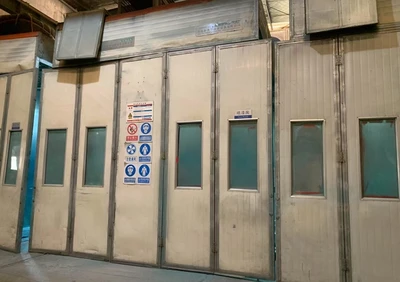 Balasen Painting CapabilityFebruary 27, 2025Balasen has adequate painting equipment and capability; we can do maximum three layers of coating per client requirement. it includes primer, intermediate and final coat. The nominal thickness is 320 ...view
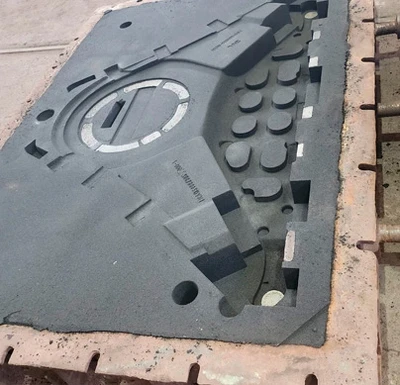 What Is Resin Sand Casting and How Does It Work?June 20, 2025When it comes to manufacturing durable metal components for industries like agriculture, resin sand casting is a go-to method for producing high-quality, intricate parts. Known for its strength and pr...view
 How to Choose a Casting Process for Pump and Valve BodiesAugust 24, 2026Selecting a casting process for pump and valve bodies is not simply a choice between the lowest tooling price and the smoothest surface. These components often contain flanges, sealing faces, internal...viewGray Iron vs. Ductile Iron Castings: Properties, Machinability, Cost and ApplicationsAugust 24, 2026Gray iron and ductile iron are both iron-carbon casting materials, but they do not behave the same way in service. The key difference is the shape of the graphite inside the metal. Gray iron contains ...viewHow Do Foundries Choose the Right Casting Process for Different Metals?November 12, 2025Choosing the right casting process depends on a combination of material properties, cost considerations, and design complexity. Foundries make this decision based on the metal’s melting temperature, ...view
 +86-18816569813
  EN
EN