Create a sustainable future
In recent decades, the global metal casting industry has witnessed an impressive technological transformation. Once reliant on manual labor and experience-based intuition, foundries today are becoming digitally enhanced, data-driven, and environmentally conscious production centers. From the development of high-strength alloys to the rise of automation and smart sensors, casting has evolved into a precise science that supports the manufacturing backbone of industries such as automotive, agriculture, and heavy equipment. This casting evolution reflects the industry's transition from traditional craftsmanship to intelligent manufacturing.
For centuries, casting has served as one of humanity’s most vital production methods. However, what began as a simple sand-molding process has evolved into a sophisticated operation powered by simulation software, robotics, and artificial intelligence. This evolution of casting has enabled manufacturers to achieve higher accuracy, efficiency, and process control.
Digital modeling allows engineers to visualize mold filling and cooling before a single pour is made. This predictive capability minimizes defects, reduces waste, and ensures greater consistency across production batches. Modern facilities utilizing these digital systems can monitor temperature fluctuations, pouring rates, and gas release in real time—achieving unparalleled precision and repeatability.
In China, a new generation of foundries is leading this technological shift. For example, companies specializing in carbon steel casting china have integrated computer-controlled furnaces and 3D-printed mold technologies to achieve better dimensional accuracy and material performance. These smart systems allow manufacturers to maintain tight tolerances while shortening production cycles, giving them a competitive edge in global supply chains.
Environmental sustainability has emerged as one of the defining priorities for the casting industry. Historically, casting was associated with high energy consumption and waste output, but modern methods are turning that reputation around.
The furan resin sand casting process is one example of how innovation can align production efficiency with environmental responsibility. This technique provides excellent mold strength, smoother surface finishes, and reduced emissions compared to older resin systems. Moreover, the sand can be reused multiple times, cutting down on waste and cost.
Foundries worldwide are also adopting more energy-efficient furnaces, advanced filtration systems, and waste-heat recovery technologies. These improvements are not only beneficial for the planet but also economically advantageous, as they reduce fuel consumption and operational expenses.
Furthermore, foundries producing ductile iron casting china components are setting new standards in sustainability by implementing closed-loop sand reclamation systems and low-emission binders. These initiatives are part of a broader movement toward eco-smart foundries that balance performance, quality, and environmental stewardship.
Automation has become the heartbeat of the modern foundry. Robotics handle dangerous and repetitive tasks such as pouring molten metal or removing castings from molds, significantly improving workplace safety. Meanwhile, sensors embedded throughout the production line collect data on temperature, metal flow, and cooling rates.
This real-time data enables predictive maintenance—machines can now detect early signs of wear or inefficiency and automatically schedule service before breakdowns occur. Artificial intelligence further refines these systems by learning from operational data and continuously improving process control.
Foundries focusing on gray iron casting china products have embraced these smart systems to maintain consistent metallurgical properties and minimize defects. Their advanced quality control protocols—powered by digital inspection and automated pattern recognition—are making iron castings more durable and cost-efficient than ever.
With such innovation, the “smart foundry” has become a symbol of Industry 4.0 integration in manufacturing. The combination of automation, analytics, and sustainability ensures that casting remains relevant and resilient in a rapidly changing industrial landscape.
The evolution of modern metal casting is more than just an industrial trend—it’s a transformation that touches every sector of the global economy. Industry insights shared through platforms such as a modern casting magazine also highlight how digital technologies and sustainable practices are reshaping foundry operations. From renewable energy infrastructure to heavy-duty machinery, cast components remain essential for durability and precision.
As smart technologies, eco-friendly materials, and digital connectivity continue to advance, foundries are positioned to play a critical role in sustainable industrial growth. Following the latest metal casting news and industry developments helps manufacturers understand emerging technologies, material innovations, and future production trends. The journey from traditional craftsmanship to intelligent manufacturing is ongoing, and it promises a future where efficiency, quality, and responsibility coexist seamlessly.
Modern foundries use automation and digital monitoring to improve efficiency, reduce waste, and ensure consistent quality.
It reduces emissions, improves mold reusability, and delivers superior surface finishes while minimizing energy consumption.
They integrate AI, robotics, and IoT systems to enhance production control, improve safety, and reduce environmental impact.
High-performance materials like carbon steel casting china, ductile iron casting china, and gray iron casting china dominate due to their strength and versatility.
Automation enables real-time quality monitoring, predictive maintenance, and faster production cycles without compromising accuracy.
 Manganese Steel Casting: The Ultimate Wear-Resistant Solution By BalasenAugust 5, 2025In heavy industries where extreme wear and impact resistance are critical, manganese steel casting has become the material of choice for durable components. As a professional manufacturer with extensi...view
 Grey Iron for Casting: Properties and UsesNovember 27, 2025Gray iron is a widely used material in the metal casting industry, renowned for its excellent castability, machinability, and cost-effectiveness. As an essential part of custom metal casting and gray ...view
 The Aluminum Shift: How China’s NEV Boom Is Transforming Auto ComponentsJune 20, 2025In China’s booming new energy vehicle (NEV) market, a pivotal transformation is reshaping automotive manufacturing: the widespread shift from cast iron to aluminum castings. As NEVs lead sales and gr...view
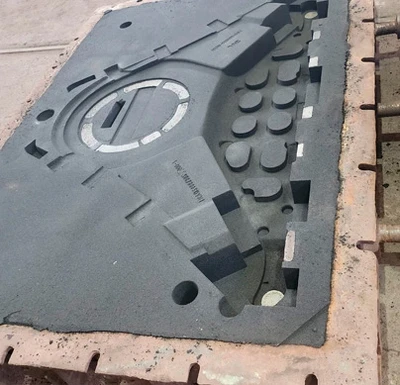 What Are the Key Differences Between Traditional Sand Casting and Modern Resin-Based Casting Processes?November 12, 2025The key differences between traditional sand casting and modern resin-based casting processes lie in the molding materials, surface quality, dimensional accuracy, and environmental performance. Tradit...viewGray Iron vs. Ductile Iron Castings: Properties, Machinability, Cost and ApplicationsAugust 24, 2026Gray iron and ductile iron are both iron-carbon casting materials, but they do not behave the same way in service. The key difference is the shape of the graphite inside the metal. Gray iron contains ...viewHow to Choose a Casting Process for Pump and Valve BodiesAugust 24, 2026Selecting a casting process for pump and valve bodies is not simply a choice between the lowest tooling price and the smoothest surface. These components often contain flanges, sealing faces, internal...view
 +86-18816569813
  EN
EN