Create a sustainable future
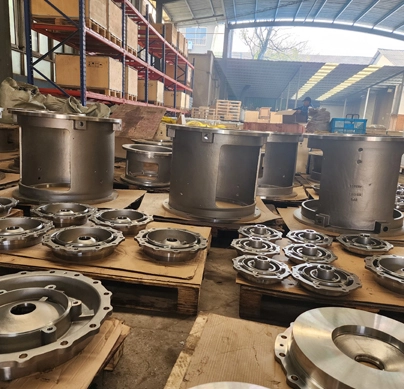
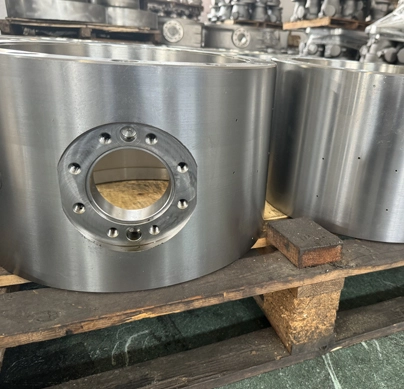
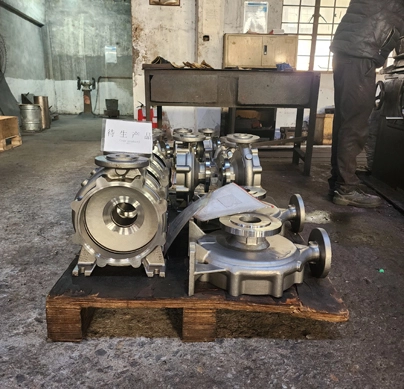
The key differences between traditional sand casting and modern resin-based casting processes lie in the molding materials, surface quality, dimensional accuracy, and environmental performance. Traditional sand casting uses natural sand with clay and water as binders, making it cost-effective and suitable for large parts. In contrast, resin-based casting—especially the furan resin sand casting process—uses chemical binders that create stronger molds, produce smoother surfaces, and allow for greater precision in complex geometries. This furan sand casting method is widely used for producing large and complex metal components. Resin systems also reduce water use and energy consumption, aligning with the modern push toward cleaner, automated foundry operations.
Traditional sand casting has been used for centuries to produce metal components for industries such as automotive, construction, agriculture, and heavy machinery. It relies on natural sand mixed with clay and water to form the mold, into which molten metal is poured.
One of the biggest advantages of this process lies in its cost efficiency and flexibility. Foundries can easily adapt molds for a variety of shapes and sizes, making it ideal for low- to medium-volume production runs.
However, the limitations of traditional sand casting are also well known. The dimensional accuracy of the final part is often dependent on the mold quality, and surface finish tends to be rougher compared to more advanced processes.
Additionally, environmental regulations and sustainability demands have pushed many foundries to reduce emissions and energy consumption, motivating the shift toward cleaner alternatives such as resin-bonded sand systems.
Resin-based casting, especially the furan resin sand casting process, has revolutionized foundry operations in the last few decades. Instead of water and clay, resin-bonded sands use chemical binders that harden the mold at room temperature. This results in much stronger molds with better dimensional stability and smoother casting surfaces.
These benefits make resin-based systems particularly attractive to alloy steel casting factory operations that need tighter tolerances and improved mechanical properties in their castings. Compared to green sand, resin systems reduce the occurrence of gas defects and allow for more complex geometries with thinner walls.
Another key benefit is environmental performance. Although resin binders require careful handling due to chemical content, overall waste and water use are significantly reduced. Many manganese casting foundry facilities have already upgraded part of their lines to hybrid systems that combine traditional molding for larger parts and resin-bonded systems for precision components.
Resin-based casting has become a preferred choice in various industries that require both precision and durability.
For instance, mining casting manufacturers increasingly adopt furan resin sand casting molds to produce wear-resistant components, such as crusher liners, mill liners, and dragline chain links. The superior mold strength ensures these castings meet the high mechanical demands of the mining sector.
Similarly, ductile iron casting china operations have benefited from resin-based systems in agricultural machinery and valve applications. Ductile iron, known for its combination of strength and ductility, performs better when cast in molds with improved thermal stability. The result is fewer shrinkage defects, better metallurgical structure, and reduced machining costs after casting.
In agricultural equipment manufacturing, agricultural casting production often combines both sand and resin-based processes, depending on the part’s geometry and expected workload. For example, larger frame components might still use green sand molds, while smaller, complex brackets are cast with resin-bonded sands to achieve tighter dimensional control.
Quality control has become one of the most crucial differentiators among modern foundries. Computer-aided mold design, 3D scanning, and automatic pouring systems allow foundries to maintain consistency even in high-mix, low-volume production environments.
Resin-based processes align perfectly with digitalization trends in the casting industry. By precisely controlling the curing process, foundries can achieve better repeatability and reduce scrap rates. This is especially important for export-oriented copper casting china companies supplying global markets where international quality standards such as ISO 8062 and ASTM A802 are mandatory.
Another key innovation involves combining resin molds with advanced simulation software to predict thermal flow and solidification defects before production begins. This integration helps foundries improve material yield and shorten development cycles, which directly translates to lower production costs and faster delivery.
While traditional sand casting has a smaller upfront cost, the long-term sustainability and quality advantages of resin-based systems are difficult to ignore.
Foundries must balance environmental regulations, customer demands, and operational efficiency. The transition toward resin-bonded systems has also encouraged the use of recyclable sands and binder recovery technologies to reduce waste.
Economic factors play a decisive role too. As energy and labor costs rise, automation and process optimization have become vital for maintaining competitiveness. In countries like China, where both traditional and modern foundry technologies coexist, hybrid facilities are setting new industry standards by combining gray iron casting china methods with modern process control to achieve both scalability and precision.
The casting industry is undergoing a quiet revolution—moving from traditional, labor-intensive processes to cleaner, more automated, and more consistent production models. Resin-based casting systems, led by the furan resin sand casting process, are at the forefront of this transformation.
For foundries seeking to meet the rising expectations of quality, sustainability, and cost efficiency, upgrading to modern resin-based casting technologies is no longer just an option—it’s a strategic necessity.
Resin-based casting offers improved dimensional accuracy, smoother surface finishes, reduced defects, and better mold strength. It also requires less water and allows for more complex part designs.
The initial setup cost is higher due to chemical binders and equipment, but lower rework rates and higher yield make it more cost-effective in the long term.
Resin-based casting is widely used in mining, agriculture, valve manufacturing, and heavy equipment industries—especially where precision and durability are critical.
Many Chinese foundries combine traditional sand and resin-bonded methods, optimizing production flexibility while maintaining export-quality standards.
 Grey Iron for Casting: Properties and UsesNovember 27, 2025Gray iron is a widely used material in the metal casting industry, renowned for its excellent castability, machinability, and cost-effectiveness. As an essential part of custom metal casting and gray ...view
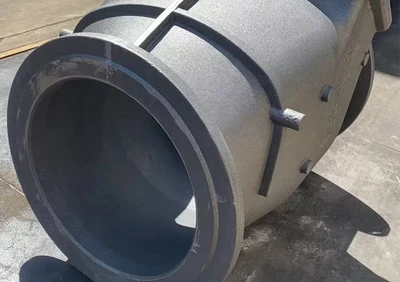 Pump Shell-Ductile IronFebruary 27, 2025This is a great ductile iron part named pump shell used for pump industry area.Balasen designed advanced pouring system to feed and float into the mold cavity.We have opened pouring system deployment,...view
 Manufacturing Process of Ductile IronNovember 27, 2025Ductile iron, known for its excellent strength and ductility, is a variant of graphite cast iron typically used in engineering applications requiring a high tensile strength. The process of manufactur...view
 What Is Lost Foam Casting?March 27, 2026Lost foam casting is a modern metal casting method widely used in industries that require high precision and complex geometries. In this process, a foam pattern—typically made from expanded polystyre...viewHow Do Foundries Choose the Right Casting Process for Different Metals?November 12, 2025Choosing the right casting process depends on a combination of material properties, cost considerations, and design complexity. Foundries make this decision based on the metal’s melting temperature, ...view
 How Power Casting Works in Manufacturing?November 27, 2025Power casting is a transformative manufacturing technique that plays a critical role in producing metal components for various industries. This process leverages the principles of lost wax investment ...view
 +86-18816569813
  EN
EN