Create a sustainable future
In China’s booming new energy vehicle (NEV) market, a pivotal transformation is reshaping automotive manufacturing: the widespread shift from cast iron to aluminum castings. As NEVs lead sales and green mobility becomes a national priority, this material evolution is more than a trend—it’s a strategic driver of efficiency, performance, and sustainability across the industry.
Market data underscores the accelerating shift toward aluminum castings in NEV production:
• 2024 Performance: China’s NEV-specific aluminum casting market reached 68.5 billion yuan, marking a 12.7% year-on-year growth; output hit 2.15 million tons (12.3% YoY rise).
• 2025 Projections: National aluminum casting production is expected to reach 17.43 million tons (5.25% growth), with NEV applications accounting for 2.45 million tons (13.95% jump, 14.1% of total output).
• 2030 Outlook: NEV aluminum consumption is forecast to double to 3.2 million tons annually.
• Policy Backing: China’s "14th Five-Year Plan" prioritizes high-performance lightweight castings, with billions in special funds supporting green casting and intelligent manufacturing upgrades.
1. Weight Reduction & Energy Efficiency
Weight reduction is a critical driver for battery-reliant NEVs: trimming 10% of vehicle weight boosts range by 6-8%. Aluminum—40% lighter than cast iron commonly used in ductile iron casting china—cuts energy use by 0.3-0.6 liters equivalent per 100km for every 100kg shed, extending range while easing battery load.
2. Superior Performance & Durability
• Thermal Conductivity: 4-5x better than cast iron (200-250 vs. 40-60 W/m·K), enabling efficient heat dissipation to protect critical components like range extenders.
• Corrosion Resistance: Natural dense oxide film eliminates rust risks common in carbon steel casting china, reducing maintenance needs.
• Fatigue Resistance: Withstands tens of thousands of load cycles, adapting to NEVs’ frequent start-stop scenarios.
3. Alignment with Green Manufacturing Goals
Aluminum aligns with China’s sustainability agenda: lighter NEVs reduce lifecycle carbon emissions, and its high recyclability supports circular economy efforts—critical as environmental regulations for automotive production tighten.
As China solidifies its global leadership in NEV production and adoption, the shift from cast iron to aluminum castings has become a cornerstone of industry success. Driven by data, performance, and environmental purpose, this transformation elevates driving experiences and paves the way for a greener, more efficient automotive future. For manufacturers and industry stakeholders involved in valve casting china, aluminum is more than a material choice—it’s the backbone of China’s NEV revolution.
With these information ,Let me know your thoughts.please contact us.
 Materials for Lost Wax CastingNovember 27, 2025The art of lost wax investment casting stands as a cornerstone in the production of intricate metal components. Central to this process is the creation of molds that can precisely capture the fine det...view
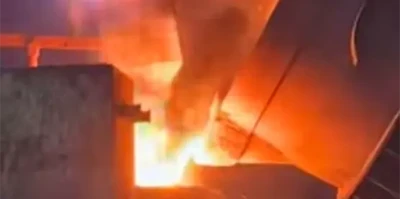 The Evolution of Modern Casting: From Traditional Techniques to Smart FoundriesNovember 12, 2025In recent decades, the global metal casting industry has witnessed an impressive technological transformation. Once reliant on manual labor and experience-based intuition, foundries today are becoming...view
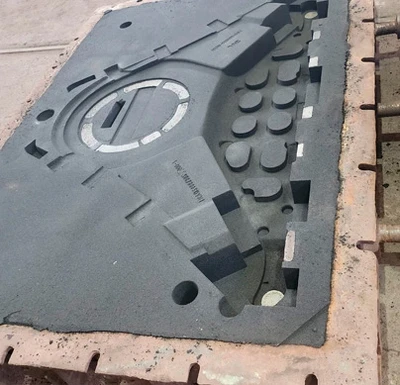 What Are the Key Differences Between Traditional Sand Casting and Modern Resin-Based Casting Processes?November 12, 2025The key differences between traditional sand casting and modern resin-based casting processes lie in the molding materials, surface quality, dimensional accuracy, and environmental performance. Tradit...view
 What Is Lost Foam Casting?March 27, 2026Lost foam casting is a modern metal casting method widely used in industries that require high precision and complex geometries. In this process, a foam pattern—typically made from expanded polystyre...view
 Quality of Cast Stainless SteelNovember 27, 2025Stainless steel casting is a highly regarded manufacturing process used to create intricate and durable components. This process is crucial in industries where strength, corrosion resistance, and the ...view
 Furan Resin Sand Casting: Supporting Your Next ProjectAugust 5, 2025When it comes to high-quality sand casting solutions, furan resin sand casting stands out as a reliable and efficient method for producing precise metal components. As a professional casting and forgi...view
 +86-18816569813
  EN
EN