Create a sustainable future

Power casting is a transformative manufacturing technique that plays a critical role in producing metal components for various industries. This process leverages the principles of lost wax investment casting, cnc solutions, and sand casting sand to create high-quality parts with precision and reliability. Understanding power casting is essential for professionals seeking to improve production efficiencies and enhance quality in manufacturing operations. This article provides a detailed exploration into power casting, including its core principles, equipment required, step-by-step process, advantages in large-scale production, and the industries that typically utilize this innovative method.
The core principles of power casting revolve around the precise control and manipulation of casting materials to form complex shapes with high dimensional accuracy. At its essence, power casting involves several foundational techniques:
Lost Wax Investment Casting: This involves creating a wax model of the desired part, surrounding it with a ceramic shell, and then melting away the wax to leave a cavity for molten metal.
Cold Forging: Utilizes significant pressure to shape metals at room temperature, enhancing strength.
Sand Casting: Involves forming a mold from sand casting sand, into which metal is poured to make a cast part. Sand casting can involve green sand mold casting or other techniques utilizing either resin or foam for lost foam casting.
Technique | Materials | Applications |
Lost Wax Investment Casting | Wax, ceramic, molten metal | Complex metal parts, jewelry |
Cold Forging | Metal alloys | High-strength components, automotive parts |
Sand Casting | Green Sand, Metal alloy | Large components, pipes |
These principles ensure that parts produced via power casting possess the precise tolerances and mechanical properties demanded by modern engineering standards.
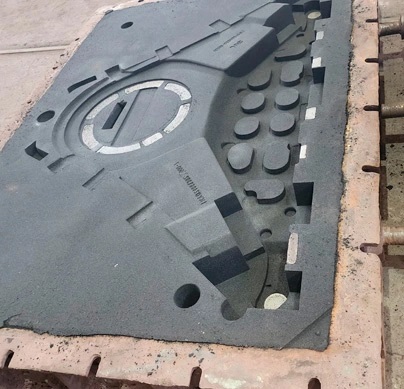
Power casting involves a variety of specialized equipment to ensure quality and efficiency:
Furnaces: To melt metals like gray iron and copper for casting for use in molds.
Molding Machines: Equipment used for metal casting sand or shell casting supplier processes to create reusable molds.
CNC Solutions: CNC turning centers, cnc milling turning machines, and 4 axis cnc mill systems for post-casting processes to enhance part precision.
Horizontal Bore Machines: Used in the manufacture of parts requiring precise bore dimensions.
Each piece of machinery serves a unique function in the casting process, whether it's creating the mold, refining the metal, or finalizing the product dimensions through precision machining.
Power casting is a multi-stage process that involves several critical steps to ensure the highest quality:
Mold Preparation: Use of sand casting foundry techniques or alternative mold casts, like those used in the shell mold casting process.
Metal Melting: Precise melting of metals, such as ductile iron or aluminum casting, is crucial to fill molds accurately without defects.
Pouring: Carefully fill molds to avoid air pockets and ensure complete filling for uniform thickness.
Cooling and Removal: Allow the metal to cool solidly before breaking away sand or shell molding to reveal the cast part.
Finishing: Machining the cooled casts using cnc drilling, precision CNC milling, or other processes to achieve desired dimensions and surface finishing.
This step-by-step guide illustrates power casting's complexity and precision, highlighting the importance of accuracy at each stage.
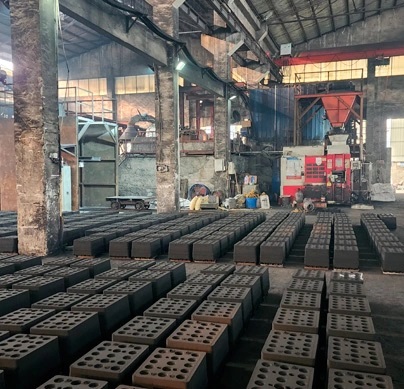
Power casting offers distinct advantages for large-scale production:
Cost Efficiency: The streamlined process of creating molds results in lower cnc machining cost and cnc machining price, beneficial for mass production.
Material Versatility: Compatible with a wide range of materials such as stainless steel investment casting, ductile iron material, and various copper casting and aluminum metal casting.
Quality Consistency: Automated controls and equipment precision ensure consistent quality across production runs.
Scalability: Power casting can efficiently scale to meet increasing production demands without sacrificing quality.
These benefits underscore the competitive edge power casting gives to manufacturers, especially those involved in massive production volumes like auto diecasting and mining casting.
Power casting is integral to several major industries, each benefiting from its reliability and efficiency:
Automotive: Utilized for creating automotive castings and components with intricate details.
Energy: Cast iron pumps and cast iron water pump components benefitting from power casting's durability.
Machinery Manufacturing: Components like cnc turned parts, 3 axis mill fittings, and open die forging items.
Construction Equipment: High-strength, durable casting parts essential for heavy construction machinery.
Recognition of power casting's contributions highlights its pivotal role across diverse sectors. Its efficiency and adaptability enable it to provide tailored solutions across various applications.
Power casting remains a cornerstone technique within the manufacturing industry. From its foundational principles to the high-tech equipment employed, this method's proficiency in producing durable, precision-oriented components is unrivaled. As technologies advance, merging traditional metal casting services with modern cnc solutions, power casting continues to evolve, offering even more sophisticated solutions to contemporary manufacturing challenges. For companies looking to remain competitive, engaging with power casting technology—whether through custom metal casting or large-scale production—can ensure that components not only meet but exceed performance expectations. By understanding the detail and dedication involved in power casting, one gains a greater appreciation of its significant impact on industry and innovation.
 Materials for Lost Wax CastingNovember 27, 2025The art of lost wax investment casting stands as a cornerstone in the production of intricate metal components. Central to this process is the creation of molds that can precisely capture the fine det...view
 Applications of Ductile Iron in EngineeringNovember 27, 2025Ductile iron, also known as nodular iron or spheroidal graphite iron, has emerged as a key material in the field of engineering, owing to its remarkable mechanical properties. Unlike gray iron, which ...view
 How to Choose a Metal Casting Foundry: RFQ and Supplier Evaluation ChecklistAugust 24, 2026Choosing a metal casting foundry is a technical sourcing decision, not simply a comparison of quoted unit prices. A supplier may offer the requested alloy yet lack experience with the part's wall ...view
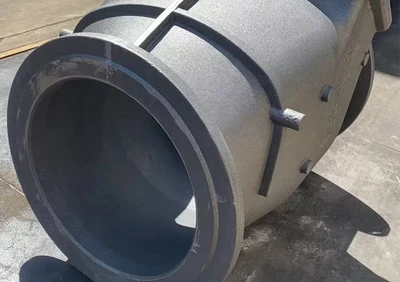 Pump Shell-Ductile IronFebruary 27, 2025This is a great ductile iron part named pump shell used for pump industry area.Balasen designed advanced pouring system to feed and float into the mold cavity.We have opened pouring system deployment,...view
 Quality of Cast Stainless SteelNovember 27, 2025Stainless steel casting is a highly regarded manufacturing process used to create intricate and durable components. This process is crucial in industries where strength, corrosion resistance, and the ...view
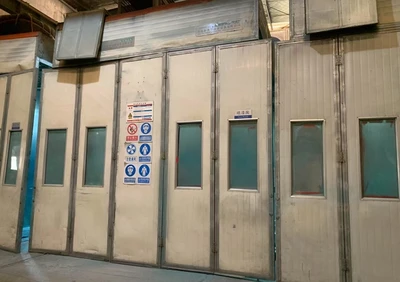 Balasen Painting CapabilityFebruary 27, 2025Balasen has adequate painting equipment and capability; we can do maximum three layers of coating per client requirement. it includes primer, intermediate and final coat. The nominal thickness is 320 ...view
 +86-18816569813
  EN
EN