Create a sustainable future
In recent years, furan resin sand casting has become one of the most preferred methods among global foundries. The main reason lies in its balance of cost efficiency, precision, and adaptability to various metals. This process uses a furan resin binder mixed with sand to create molds that offer excellent surface finish and dimensional accuracy. Its rising popularity can be attributed to consistent casting quality and the ability to produce complex geometries without expensive tooling modifications.
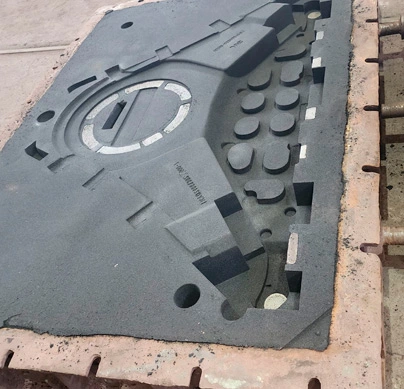
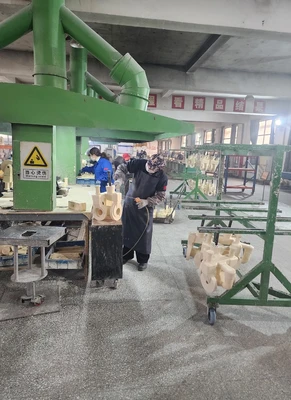
The furan resin sand casting process involves coating sand grains with a furan-based binder and then hardening the mold using an acid catalyst. Unlike traditional green sand, which uses moisture for bonding, this process produces a dry, rigid mold with higher strength. This rigidity helps prevent deformation during metal pouring, resulting in castings with improved dimensional consistency.
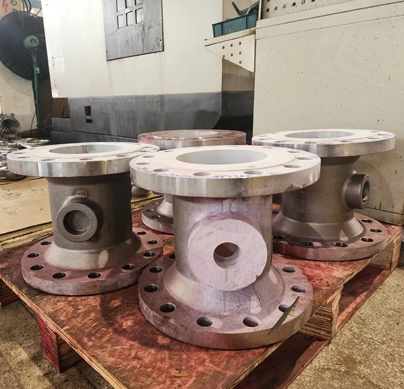
Furan resin molds are especially advantageous for medium to large castings where precision and smooth surface finishes are critical. Because the binder content is low and the curing reaction is fast, foundries can achieve better productivity while reducing the emission of harmful gases. This makes it an increasingly preferred choice for manufacturers seeking cleaner, more sustainable production.
Furan resin sand casting is suitable for a wide range of metals including steel, iron, and non-ferrous alloys. It’s frequently used in carbon steel casting china operations, where the need for durability and heat resistance is crucial. Additionally, foundries specializing in manganese casting foundry applications leverage this process to manufacture heavy-duty wear-resistant components for mining and construction machinery.
In agricultural casting production, furan resin molds are used to achieve consistent quality for tractor housings, plow parts, and hydraulic fittings. The method’s dimensional stability makes it ideal for mass production of high-precision agricultural machinery parts. Similarly, alloy steel casting factory operations adopt this technique to ensure that complex alloy components maintain their mechanical integrity after heat treatment.
Another reason for the increasing adoption of furan resin sand casting is its alignment with sustainability goals. Many foundries are moving toward eco-friendly binder systems, and furan-based resins, when properly handled, produce lower emissions than traditional phenolic or urea resins. The reclaimed sand from furan processes can often be reused multiple times after mechanical reclamation, reducing both material waste and production costs.
Moreover, modern foundries integrate automated mixing and pouring systems into the furan line to improve precision and consistency. With continuous process improvements, the furan resin sand casting method now competes closely with investment and shell mold casting in terms of accuracy while maintaining much lower tooling expenses.
Furan resin sand casting provides better surface finish, improved dimensional accuracy, and higher mold strength compared to green sand casting, making it suitable for more complex or large castings.
While not entirely emission-free, furan resin can be used in controlled systems to minimize pollutants. Many foundries employ advanced reclamation technology to recycle sand and reduce environmental impact.
It can handle a wide range of metals including gray and ductile iron, carbon steel, stainless steel, and aluminum alloys.
Furan resin sand casting is more economical than investment casting while offering comparable accuracy for many industrial applications.
 Manganese Steel Casting: The Ultimate Wear-Resistant Solution By BalasenAugust 5, 2025In heavy industries where extreme wear and impact resistance are critical, manganese steel casting has become the material of choice for durable components. As a professional manufacturer with extensi...view
 The Aluminum Shift: How China’s NEV Boom Is Transforming Auto ComponentsJune 20, 2025In China’s booming new energy vehicle (NEV) market, a pivotal transformation is reshaping automotive manufacturing: the widespread shift from cast iron to aluminum castings. As NEVs lead sales and gr...view
 What Are the Differences Between Resin Sand Casting and Green Sand Casting?June 20, 2025Choosing the right casting method is crucial for producing high-quality metal components, especially for industries like agriculture. Resin sand casting and green sand casting are two widely used tech...viewWhat is the advantage of changing the design from a fabrication part to be a casting product?June 20, 2025As you may struggling when you face issue on a fabrication product, high cost of price, bad quality of welding, deformation happen due to it is not strong enough etc..Why do not you think to change a ...viewGray Iron vs. Ductile Iron Castings: Properties, Machinability, Cost and ApplicationsAugust 24, 2026Gray iron and ductile iron are both iron-carbon casting materials, but they do not behave the same way in service. The key difference is the shape of the graphite inside the metal. Gray iron contains ...view
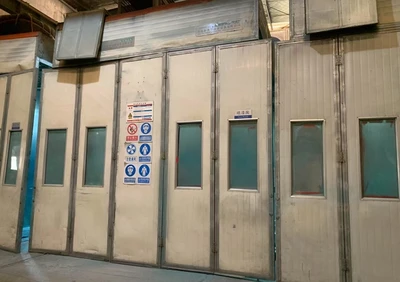 Balasen Painting CapabilityFebruary 27, 2025Balasen has adequate painting equipment and capability; we can do maximum three layers of coating per client requirement. it includes primer, intermediate and final coat. The nominal thickness is 320 ...view
 +86-18816569813
  EN
EN