Create a sustainable future

Balasen is a manganese steel casting foundry in China supplying custom wear-resistant parts for mining, construction, cement, quarrying and railway equipment. We manufacture crusher jaws, liners, impact plates, track pads and other high-manganese steel castings according to customer drawings and specified material requirements.
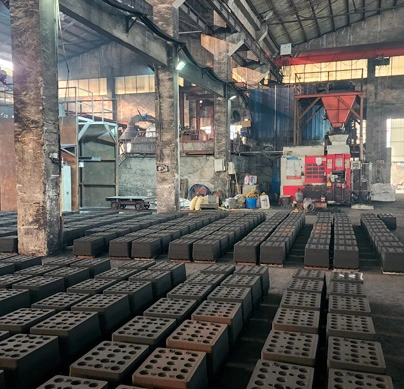
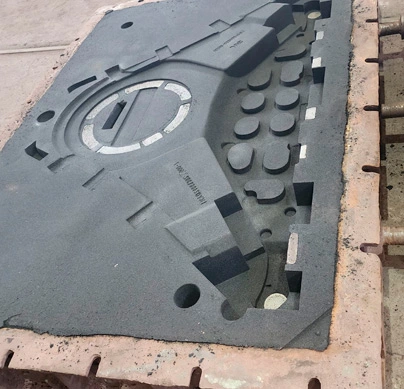
High manganese steel casting process, heat treatment, machining and inspection plans are selected according to part size, operating load, impact conditions and quality requirements. Available manufacturing routes include green sand casting, furan resin sand casting and lost foam casting for suitable manganese steel components.
Send us your drawing, material specification, required quantity, application conditions and inspection standard. Our team will review casting feasibility, process selection and quotation requirements for your project.
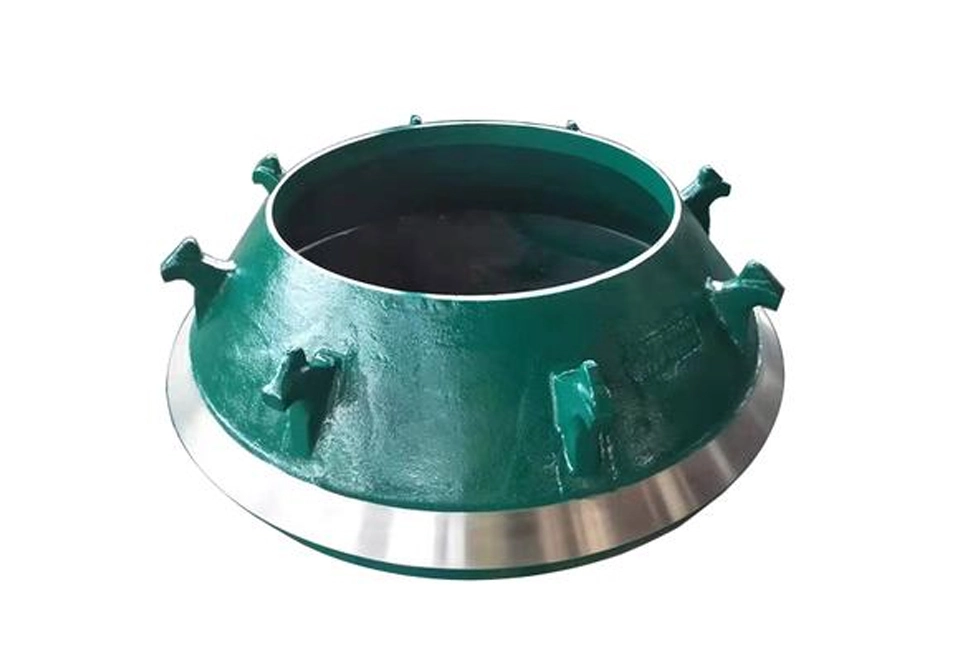
Manganese steel casting is crucial for high-impact applications. When struck, it undergoes a unique manganese steel casting process known as work-hardening, during which its surface hardness increases dramatically while the core remains tough and ductile. This combination effectively resists deformation and wear. As a professional manganese steel casting foundry, we specialize in producing high-quality manganese steel castings that excel in these demanding conditions.
In mining machinery like rock crushers and construction equipment such as excavator buckets, manganese steel castings endure repeated, intense impacts. As a manganese steel casting foundry, we understand the importance of precision in every step of production to meet the demanding requirements of these industries. Choosing a reliable custom metal casting company ensures each component is engineered for durability and performance. This not only extends equipment lifespan but also reduces maintenance frequency, saving both time and costs in these high-demand sectors.
Manganese steel castings, produced by a specialized metal casting company, revolutionize crusher wear parts with their remarkable self-hardening properties. When these manganese castings come into contact with rocks during crushing, the high impact triggers a structural transformation. The steel's surface becomes increasingly harder with use. This unique feature, often engineered by a leading manganese casting foundry, ensures that as wear occurs, the casting continuously adapts. As a result, it lasts far longer than traditional materials, reducing the need for frequent replacements and significantly boosting the overall efficiency of crushing operations. This performance is supported by a professional manganese steel foundry with expertise in wear-resistant casting solutions.
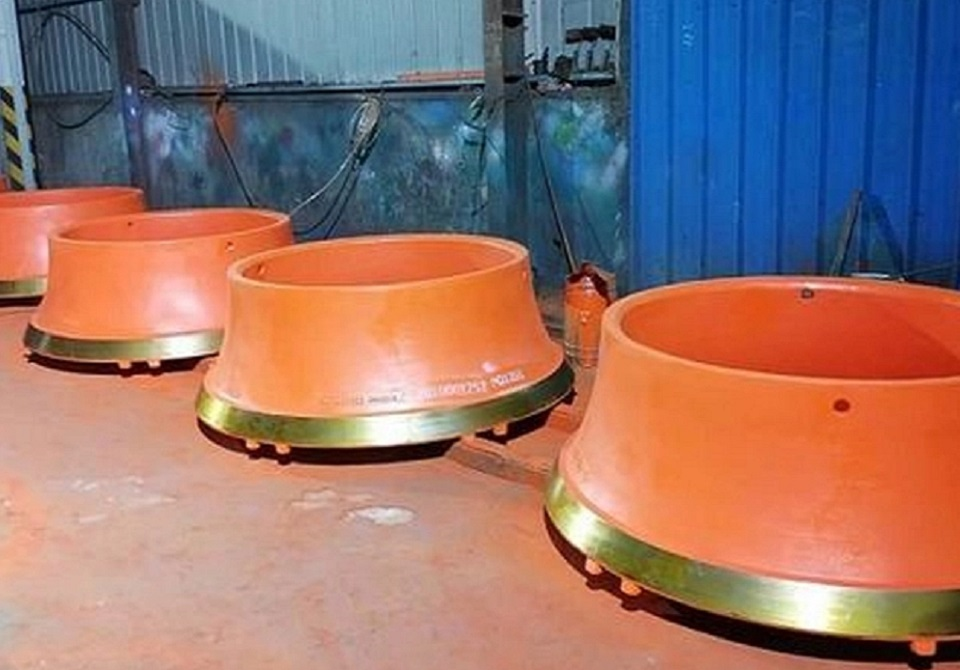
Balasen provides custom manganese steel casting solutions for mining, crushing, construction and other heavy-duty applications. Material grade, molding process, heat treatment, machining and inspection are selected according to the drawing, component size, impact load, abrasion conditions and project-specific quality requirements.
| Capability | Balasen's Available Options |
|---|---|
| Material Grades | High-manganese steel grades such as the ZGMn13 series, ASTM A128/A128M requirements and customer-specified material compositions. The final grade and chemical composition are confirmed according to the drawing, operating conditions and applicable material standard. |
| Typical Casting Parts | Crusher jaws, wear liners, hammer heads, impact plates, track pads and other wear-resistant components used in mining and heavy machinery. Component suitability depends on impact frequency, abrasive media, operating temperature and required service life. |
| Primary Casting Process | Furan resin sand casting is available for medium and large cast steel components. Green sand casting and lost foam casting can be evaluated for suitable designs and production requirements. The molding process is selected after reviewing part geometry, wall thickness, casting weight, quantity and quality requirements. |
| Casting Weight Range | Published furan resin sand casting capacity for cast steel components ranges from 200 kg to 10,000 kg. The actual available weight range for each manganese steel casting is confirmed through an engineering and foundry feasibility review. |
| Dimensional Accuracy | Furan resin sand casting can typically achieve CT7–CT9 dimensional accuracy. Final tolerance depends on component size, geometry, wall thickness, heat treatment deformation and machining allowance. |
| Surface Roughness | Typical furan resin sand casting surface roughness is approximately Ra 12.5–25 μm. Specific surface requirements should be stated on the drawing. Machining may be recommended for sealing, mounting and precision assembly surfaces. |
| Heat Treatment | Solution heat treatment followed by rapid water quenching can be applied to develop the required austenitic structure, toughness and work-hardening performance. Heat treatment parameters are established according to material grade, section thickness and applicable technical requirements. |
| Machining Support | Turning, milling, drilling, tapping and boring are available through Balasen's custom machining capabilities. The published general machining range covers parts from 0.5 kg to 5,000 kg and approximately 3 mm to 1,600 mm in size. Because manganese steel becomes difficult to machine after work hardening, machining feasibility and allowance should be confirmed before production. |
| Quality Inspection | Available inspection can include dimensional checks, alloy composition testing, mechanical property testing, ultrasonic testing and magnetic particle inspection. Inspection method, sampling frequency and acceptance criteria should be defined in the drawing, purchase specification or agreed inspection plan. |
| Typical Lead Time | The published lead time for cast steel blanks produced by furan resin sand casting is approximately 30–45 days. Tooling, heat treatment, machining, inspection, order quantity and special documentation may affect the final delivery schedule. |
Please provide the part drawing, material grade, casting weight, order quantity, operating conditions, heat treatment requirements, machining scope and inspection standard. Balasen will review the project and recommend a suitable manufacturing route.
Upload Your DrawingThe appropriate manganese steel grade should be selected according to impact energy, abrasion type, component geometry, section thickness, operating temperature and the customer's material specification. Manganese content alone is not sufficient to determine whether a grade is suitable for a specific wear application.
Balasen manufactures manganese steel castings according to confirmed drawings and project-specific technical requirements. Final chemical composition, heat treatment, mechanical properties, inspection methods and acceptance criteria are agreed before production.
| Material Option | Selection and Application Guidance |
|---|---|
| ZGMn13 Series | The ZGMn13 series is commonly considered for components exposed to repeated impact and severe abrasive wear. Under sufficient impact loading, the working surface can gradually harden while the core retains its toughness. Typical applications: Crusher jaws, wear liners, hammer heads, impact plates, track pads and heavy mining machinery parts. The exact ZGMn13 grade, chemical composition and heat-treatment requirements must be confirmed from the customer's drawing or material specification. |
| ASTM A128/A128M | ASTM A128/A128M covers austenitic manganese steel castings, including Hadfield-type manganese steel and applicable alloy modifications. It is suitable for projects where the drawing or purchase specification explicitly requires an ASTM manganese steel grade. Project confirmation: Required grade, chemical composition, heat treatment, mechanical properties and supplementary inspection requirements. Reference to ASTM A128/A128M does not mean that every manganese steel casting automatically meets every grade or supplementary requirement in the standard. Compliance is confirmed separately for each order. |
| Customer-Specified Manganese Steel | Customer-specific manganese steel compositions can be evaluated when a project requires a proprietary material, an existing OEM specification or modified alloying elements for particular operating conditions. Required information: Chemical composition limits, mechanical properties, heat-treatment requirements, hardness requirements, weld-repair rules and inspection acceptance criteria. Manufacturing feasibility is reviewed before the material specification is accepted for quotation and production. |
| Alternative Wear-Resistant Materials | Standard high-manganese steel requires sufficient impact energy to develop effective work hardening. It may not be the best option for applications dominated by low-impact sliding wear. For low-impact abrasion, high initial hardness or different temperature and corrosion conditions, alloy steel casting or another wear-resistant material may be evaluated. Material selection should be based on the actual wear mechanism rather than manganese content alone. |
To recommend or confirm a manganese steel grade, please provide:
Part drawing, dimensions and casting weight
Required material standard or existing material grade
Type of abrasive material and operating conditions
Impact frequency and impact load
Expected service life or current failure mode
Heat treatment and hardness requirements
Machining scope and dimensional tolerance
Inspection methods and acceptance criteria
Send Balasen your drawing, existing material specification and operating conditions. Our team will review the application and confirm whether the requested manganese steel grade is suitable for quotation and production.
Submit Your Material RequirementsThe following answers cover common questions about manganese steel grades, casting processes, heat treatment, machining, inspection and quotation requirements.
Manganese steel casting is used to manufacture austenitic high-manganese steel components for demanding wear applications. When exposed to repeated impact and abrasion, the working surface can gradually harden while the inner material retains its toughness. This combination makes manganese steel suitable for crusher, mining, construction and other heavy-duty equipment.
Balasen can evaluate projects requiring the ZGMn13 series, customer-specified high-manganese steel compositions and grades covered by ASTM A128/A128M . The exact grade, chemical composition, heat treatment and acceptance requirements are confirmed for each order after reviewing the customer's drawing and material specification.
Typical parts include crusher jaws, wear liners, hammer heads, impact plates, track pads and other components exposed to repeated impact and severe abrasive wear. These castings are commonly used in mining, quarrying, cement production, construction machinery and heavy material-handling equipment.
Not always. High-manganese steel requires sufficient impact energy to develop effective work hardening. In low-impact sliding wear conditions, the surface may not harden adequately. Depending on the actual wear mechanism, alloy steel casting or another wear-resistant material may provide better performance.
Furan resin sand casting is available for medium and large cast steel components. Green sand casting and lost foam casting can also be evaluated where appropriate. Process selection depends on part geometry, wall thickness, casting weight, order quantity, dimensional tolerance and surface requirements.
Balasen's published furan resin sand casting capacity for cast steel components ranges from 200 kg to 10,000 kg. The applicable weight range for a specific manganese steel part must be confirmed after reviewing the drawing, dimensions, section thickness, heat-treatment requirements and handling conditions.
Manganese steel castings can undergo solution heat treatment followed by rapid water quenching. This process helps develop the required austenitic structure, toughness and work-hardening performance. Heating temperature, holding time and cooling parameters must be determined according to material grade, casting size and section thickness.
Balasen provides turning, milling, drilling, tapping and boring through its custom machining capabilities. Inspection can include dimensional checks, alloy composition testing, mechanical property testing, ultrasonic testing and magnetic particle inspection. Because manganese steel becomes difficult to machine after work hardening, machining allowance and process sequence should be confirmed before production.
The published lead time for cast steel blanks produced by furan resin sand casting is approximately 30–45 days. Final delivery time depends on tooling, casting complexity, heat treatment, machining, inspection, order quantity and documentation requirements. A project-specific schedule is confirmed after technical review.
Please provide the part drawing, material grade, casting weight, dimensions, order quantity, operating conditions, heat-treatment requirements, machining scope, inspection standard and shipping destination. Information about the current part's wear pattern or failure mode can also help Balasen evaluate material selection and manufacturing feasibility.
Please upload files like drawings, material specifications, quantities, and shipping destination.
 +86-18816569813
  EN
EN