Create a sustainable future
Gray iron and ductile iron are both iron-carbon casting materials, but they do not behave the same way in service. The key difference is the shape of the graphite inside the metal. Gray iron contains flake-shaped graphite, while ductile iron contains substantially spheroidal graphite. That difference affects tensile behavior, impact resistance, vibration damping, machinability and the types of components each material can reliably serve.
Therefore, the choice between gray iron and ductile iron should not be based only on price or nominal strength. Engineers should also consider the load type, section thickness, required elongation, vibration, sealing surfaces, machining operations and applicable material standard. This guide compares the two materials from a practical casting and component-selection perspective.
In gray iron, graphite forms as interconnected flakes. The flakes help interrupt vibration and improve chip breaking during machining, but their sharp ends also act as local stress concentrators. As a result, gray iron normally has limited elongation and is less tolerant of impact, bending and tensile shock.
In ductile iron, magnesium treatment and controlled foundry practice encourage the graphite to form nodules rather than flakes. The rounded graphite shape reduces stress concentration and allows the metallic matrix to carry tensile and impact loads more effectively. Depending on grade and matrix, ductile iron can provide different combinations of strength, elongation, hardness and wear resistance.
This does not mean that ductile iron is automatically better. A heavily ribbed machine base may benefit more from gray iron's damping and machinability, while a suspension bracket, loaded gear housing or pressure-retaining component may need ductile iron's greater toughness. Material selection should follow the function of the component.
| Comparison Item | Gray Iron | Ductile Iron | Selection Meaning |
|---|---|---|---|
| Graphite form | Flake graphite | Spheroidal or nodular graphite | Graphite shape is the main reason the materials respond differently to tensile and impact loads. |
| Tensile behavior | Lower tensile strength and very limited elongation in common grades | Higher tensile and yield strength, with grade-dependent elongation | Ductile iron is usually favored for parts exposed to bending, pulling or structural loading. |
| Impact resistance | Relatively low; sudden impact can cause brittle failure | Generally higher, especially in ferritic grades | Impact energy and minimum operating temperature must be considered before grade selection. |
| Vibration damping | Excellent | Lower than gray iron | Gray iron is often suitable for machine bases, housings and components where noise and vibration control matter. |
| Machinability | Generally very good because graphite assists lubrication and chip breaking | Grade and matrix dependent; usually requires more attention to tooling and cutting conditions | Machining time, tool life and the required surface finish can affect total component cost. |
| Thermal conductivity | Generally higher | Generally lower | Gray iron is frequently considered for components that must transfer or distribute heat. |
| Pressure and overload tolerance | Suitable only where the selected grade, design and governing specification allow | Often better suited to pressure, bending and occasional overload | Pressure-retaining applications require an application-specific standard, soundness requirements and agreed inspection. |
| Typical parts | Machine bases, brake components, non-critical housings, covers and certain pump casings | Brackets, hubs, gears, agricultural parts, loaded housings, valve bodies and structural castings | The actual duty cycle and acceptance criteria are more important than the part name alone. |
Gray iron and ductile iron grades should be ordered to an agreed standard rather than by a general material name alone. For general engineering gray iron castings, ASTM A48/A48M classifies material primarily by the minimum tensile strength measured from specified test bars. Ductile iron grades are commonly specified under ASTM A536, which uses grade designations that communicate minimum tensile strength, yield strength and elongation.
International projects may instead reference ISO or EN grades. For example, ISO 1083 defines classification requirements for spheroidal graphite cast irons. The drawing and purchase order should identify the required standard, grade, mechanical properties, inspection method and any supplementary requirements.
| Material Family | Example Designations | What the Grade Primarily Communicates | Important Qualification |
|---|---|---|---|
| Gray iron | ASTM A48/A48M Classes 20, 25, 30, 35, 40 and higher classes | Minimum tensile strength from the applicable test-bar arrangement | Do not assume the test-bar value is identical in every wall section of the finished casting. |
| Ductile iron | ASTM A536 Grades 60-40-18, 65-45-12, 80-55-06, 100-70-03 and 120-90-02 | Minimum tensile strength, yield strength and elongation | The matrix and heat-treatment condition differ by grade; higher strength normally involves a trade-off in elongation. |
| Customer-specified material | ISO, EN, GB or OEM-specific grade | Project-specific chemistry, mechanical properties and acceptance criteria | Equivalent-grade substitutions should never be made from a cross-reference table alone; written customer approval is required. |
Gray iron is widely valued for machinability. Its graphite flakes support chip breaking and provide a degree of solid lubrication at the cutting interface. This can be advantageous for components with large milled faces, bearing locations, bolt patterns and bored features. Machine-tool beds, housings and covers are common examples where material damping and efficient machining can be valuable together.
Ductile iron is also machinable, but the result depends strongly on the matrix. A ferritic grade usually behaves differently from a pearlitic or heat-treated grade. Tool material, cutting speed, feed, casting skin, interrupted cuts and local hardness variation should therefore be considered when planning machining. Critical sealing surfaces should have clearly stated dimensional tolerances, geometric tolerances and surface-finish requirements on the drawing.
Neither material should be selected solely to reduce machining cost. If a component is exposed to impact or bending, choosing gray iron only because it machines more easily may create a greater service risk. Conversely, specifying a high-strength ductile iron grade for a vibration-sensitive base can add cost without improving the function that matters most.
Gray iron is often the first material evaluated for machine bases, frames and non-critical housings because it combines vibration damping, dimensional stability and machinability. Ductile iron may be considered when the housing also carries substantial structural, shock or bending loads.
Material selection depends on pressure, temperature, fluid, corrosion allowance, flange loading and the governing component standard. Gray iron can suit defined lower-duty applications, while ductile iron is frequently evaluated where greater pressure or mechanical-load tolerance is required. Explore Balasen's pump and valve casting capabilities for related material and process options.
Ductile iron is commonly considered for hubs, brackets, carriers, loaded housings and other parts exposed to shock, bending or variable field loads. Gray iron may remain appropriate for covers, bases and housings dominated by compression, damping or machining requirements.
Gray iron's thermal behavior, damping and friction characteristics make it useful for many brake and heat-dissipation applications. However, the final grade and microstructure must be selected according to the part-specific thermal cycle, wear requirement and applicable specification.
The design is mainly loaded in compression rather than impact or tension.
Vibration damping and noise reduction are important.
The component has extensive machining or large precision-machined surfaces.
Thermal conductivity is a functional requirement.
The drawing and governing standard permit gray iron for the application.
The component experiences impact, bending, tensile loading or occasional overload.
Yield strength and measurable elongation are important design inputs.
A crack-tolerant response is more important than maximum vibration damping.
The part is a loaded bracket, hub, gear, carrier, structural housing or approved pressure component.
The project specification explicitly requires a ductile or spheroidal graphite iron grade.
Gray iron is often economical to melt, cast and machine, but purchase price should not be evaluated independently of service performance. Ductile iron production requires controlled base iron, nodularizing treatment, inoculation and process monitoring. Depending on grade, heat treatment may also be required. These controls can increase manufacturing cost, but the material may reduce the risk of brittle failure or enable a lighter, stronger component.
Total cost should include pattern and tooling, yield, heat treatment, inspection, machining time, tool consumption, rejection risk, component weight, field life and the consequence of failure. For this reason, a quotation should be based on a confirmed drawing and technical specification rather than a material name and part weight alone.
Choose by failure mode: if vibration, thermal performance and machining dominate, evaluate gray iron first. If impact, bending, pressure, tensile load or overload dominates, evaluate ductile iron first. Then confirm the exact grade using the governing standard, drawing and validation requirements.
Before requesting a quotation, provide the foundry with the following information:
2D drawing and, where available, a 3D model
Required material standard and exact grade
Expected annual quantity and batch size
Estimated casting weight and overall dimensions
Critical wall sections and areas subject to high load
Heat-treatment or microstructure requirements
Machining scope, tolerances and surface-finish requirements
Required mechanical tests, hardness checks and metallographic examination
Non-destructive testing requirements and acceptance criteria
Coating, corrosion protection and delivery condition
Balasen evaluates custom gray iron castings and ductile iron casting requirements according to confirmed drawings and project-specific specifications. Final material selection, casting process, test coupons and inspection scope should be agreed before production.
Ductile iron generally provides higher tensile and yield strength and substantially greater elongation than common gray iron grades. However, strength alone does not make it the best choice for every part. Gray iron may still be preferred when damping, heat transfer, machinability or dimensional stability is the primary requirement.
Gray iron is generally easier to machine because its graphite flakes assist chip breaking and reduce cutting friction. Ductile iron machinability depends on the matrix, hardness, casting skin and heat-treatment condition, so tooling and cutting parameters should be selected for the confirmed grade.
It can be used in applications where the component standard, pressure, temperature, fluid and design permit it. For more demanding pressure or mechanical-loading conditions, ductile iron or cast steel may be required. The governing specification and engineering review must decide the material.
Its flake graphite structure helps dissipate vibrational energy within the material. This is one reason gray iron is widely considered for machine bases, housings and other components where vibration and noise control are important.
No. Standards use different grade systems, test samples and acceptance rules. Even when nominal mechanical values appear similar, a grade substitution should be reviewed against the drawing, section thickness, service conditions and applicable specification, then approved by the customer in writing.
Send Balasen your drawing, material specification, estimated quantity, machining scope and inspection requirements. Our team will evaluate the project and discuss a suitable casting and manufacturing route.
Request a Casting Review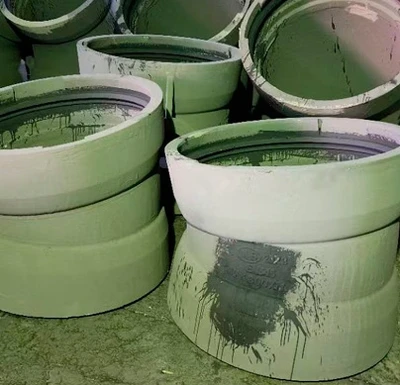 Ductile Iron Corrosion Protection: Tips to Prolong Component LifeJune 20, 2025Ductile iron is widely used in automotive, pipeline, and heavy machinery applications due to its high strength, excellent ductility, and cost-effectiveness. However, many users find that improper use ...view
 The Advantages of Investment casting that distinguish from other casting processJune 20, 2025The core advantages of investment casting (lost-wax casting) that distinguish it from other casting processes such as sand casting, shell molding, and die casting lie in high precision, complex formin...view
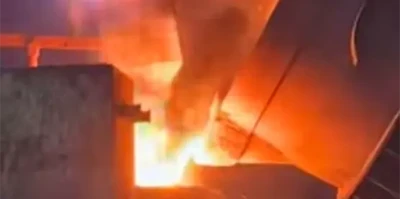 The Evolution of Modern Casting: From Traditional Techniques to Smart FoundriesNovember 12, 2025In recent decades, the global metal casting industry has witnessed an impressive technological transformation. Once reliant on manual labor and experience-based intuition, foundries today are becoming...view
 Manganese Steel Casting: Key Process Technologies by BalasenAugust 5, 2025In modern heavy industry applications where extreme wear resistance is paramount, manganese steel casting stands as the preferred manufacturing solution. As a specialized foundry with extensive experi...view
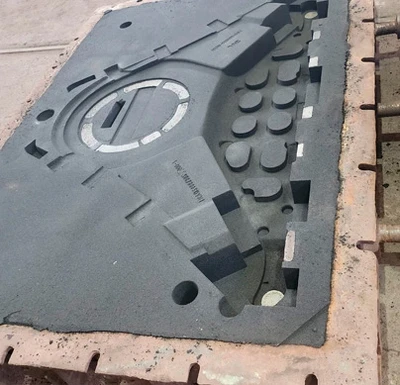 What Are the Key Differences Between Traditional Sand Casting and Modern Resin-Based Casting Processes?November 12, 2025The key differences between traditional sand casting and modern resin-based casting processes lie in the molding materials, surface quality, dimensional accuracy, and environmental performance. Tradit...viewHow Do Foundries Choose the Right Casting Process for Different Metals?November 12, 2025Choosing the right casting process depends on a combination of material properties, cost considerations, and design complexity. Foundries make this decision based on the metal’s melting temperature, ...view
 +86-18816569813
  EN
EN