Create a sustainable future

Lost foam casting is a modern metal casting method widely used in industries that require high precision and complex geometries. In this process, a foam pattern—typically made from expanded polystyrene (EPS)—is created to match the final part. The pattern is then coated with a refractory material to improve surface finish and thermal resistance. After drying, it is embedded in unbonded sand. When molten metal is poured into the mold, the foam pattern vaporizes instantly and is replaced by the metal, forming the final casting without the need for traditional cores.
One of the key advantages of this technique is its ability to produce intricate shapes with minimal machining. Because the foam pattern disappears during pouring, there are fewer parting lines and no need for core assembly, which significantly reduces production complexity. This makes the process particularly suitable for components like engine blocks, pump housings, and valve bodies.
To better understand the full workflow, including pattern making, coating, and pouring stages, you can refer to What Is Lost Foam Casting and How Does It Work?, which provides a more detailed breakdown of each step. The process has been extensively studied and applied in industrial manufacturing, with standards and research supported by organizations such as the American Foundry Society (AFS). Their publications highlight the efficiency and dimensional accuracy of lost foam casting compared to conventional sand casting methods.
In addition, many global lost foam casting companies have adopted automated production lines to improve consistency and scalability. These companies often integrate advanced simulation software to optimize mold filling and solidification, reducing defects such as porosity or misruns. As a result, lost foam casting continues to gain popularity in automotive, agricultural machinery, and heavy equipment sectors.
Overall, lost foam casting offers a unique combination of design flexibility, cost efficiency, and high-quality surface finish, making it an increasingly important process in modern metal manufacturing.
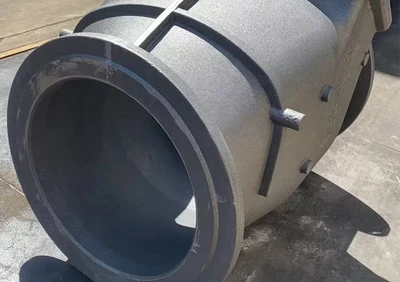 Pump Shell-Ductile IronFebruary 27, 2025This is a great ductile iron part named pump shell used for pump industry area.Balasen designed advanced pouring system to feed and float into the mold cavity.We have opened pouring system deployment,...view
 What Are the Disadvantages of Lost Foam Casting?March 27, 2026Lost foam casting is widely recognized for its ability to produce complex shapes with high precision, but like any manufacturing method, it also has limitations. One of the main drawbacks is the relat...view
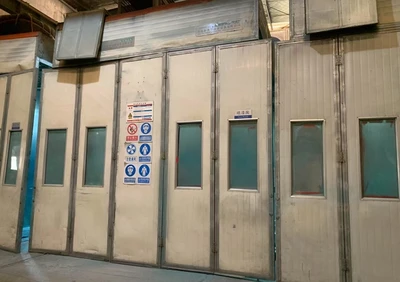 Balasen Painting CapabilityFebruary 27, 2025Balasen has adequate painting equipment and capability; we can do maximum three layers of coating per client requirement. it includes primer, intermediate and final coat. The nominal thickness is 320 ...view
 Applications of Ductile Iron in EngineeringNovember 27, 2025Ductile iron, also known as nodular iron or spheroidal graphite iron, has emerged as a key material in the field of engineering, owing to its remarkable mechanical properties. Unlike gray iron, which ...view
 Manganese Steel Casting: Key Process Technologies by BalasenAugust 5, 2025In modern heavy industry applications where extreme wear resistance is paramount, manganese steel casting stands as the preferred manufacturing solution. As a specialized foundry with extensive experi...viewWhy Is Furan Resin Sand Casting Gaining Popularity in Modern Foundries?November 12, 2025In recent years, furan resin sand casting has become one of the most preferred methods among global foundries. The main reason lies in its balance of cost efficiency, precision, and adaptability to v...view
 +86-18816569813
  EN
EN