Create a sustainable future
Choosing the right casting process depends on a combination of material properties, cost considerations, and design complexity. Foundries make this decision based on the metal’s melting temperature, mechanical requirements, and the surface finish needed for the final product. Understanding these factors ensures the best balance between quality and production efficiency. Knowing the difference between casting and foundry operations also helps manufacturers better evaluate production capabilities and process options.
Each metal behaves differently during the foundry casting process, so foundries must match the process to the metal’s physical and chemical characteristics. For instance, iron and steel require molds with higher thermal stability, while non-ferrous metals like copper or aluminum benefit from processes that allow fine detail and smooth finishes.
For high-strength industrial components, ductile iron casting china is widely used due to its excellent toughness and impact resistance. When corrosion resistance and machinability are priorities, gray iron casting china remains the go-to option for valve housings and pump casings. In contrast, for applications demanding high hardness and wear resistance, manganese casting foundry processes are ideal, especially in mining and crushing equipment manufacturing.
Among the most common foundry metal casting techniques are green sand, shell mold, lost foam, and furan resin sand casting. Green sand is the most economical option but offers limited dimensional precision. Shell mold casting, supplied by specialized shell mold casting supplier networks, produces parts with excellent surface quality and minimal machining requirements.
For detailed components and complex geometries, the lost foam casting video method demonstrates how evaporative patterns are used to produce intricate castings with minimal tooling. This method is especially favored in mining casting manufacturers facilities, where reducing machining costs can lead to significant savings on large production runs.
In the non-ferrous sector, copper casting china operations often choose permanent mold or investment casting to achieve superior surface smoothness and conductivity. Meanwhile, valve casting china manufacturers often rely on both shell and resin sand casting to balance precision with cost-effectiveness.
Selecting the right casting process is always a trade-off between foundry and casting requirements, including cost, quality, and production scale. High-precision methods like investment or shell mold casting can be expensive for large parts but ideal for smaller, complex shapes. Resin-based methods, including the furan process, offer a middle ground—achieving reasonable accuracy at moderate costs.
Foundries must also consider post-processing requirements such as heat treatment and machining. The relationship between casting and foundry capabilities directly affects final product quality and production efficiency. For example, alloy steel components from an alloy steel casting factory may require specific heat treatment steps to reach target hardness levels. Choosing a process that minimizes deformation during solidification can reduce these secondary costs and improve consistency.
For large castings, furan resin sand or green sand casting typically offers the best balance of cost and strength.
Shell mold and investment casting are preferred for parts requiring high dimensional accuracy and excellent surface finish.
The decision depends on the mechanical properties required. Iron is used for heavy-duty strength, steel for toughness, and copper for conductivity or corrosion resistance.
Yes, many foundries specialize in multi-metal casting but often dedicate separate lines or molds to prevent contamination and maintain quality standards.
New binder systems, sand reclamation technologies, and reduced-emission furnaces are making modern casting far more sustainable than traditional methods.
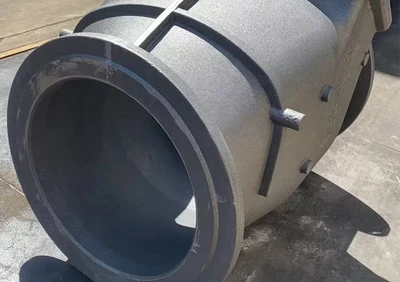 Pump Shell-Ductile IronFebruary 27, 2025This is a great ductile iron part named pump shell used for pump industry area.Balasen designed advanced pouring system to feed and float into the mold cavity.We have opened pouring system deployment,...view
 Is Lost Foam Casting Better than Sand Casting?March 27, 2026When comparing casting methods, manufacturers often weigh precision, cost, and production efficiency. Traditional sand casting has long been valued for its flexibility and relatively low tooling costs...viewWhat is the advantage of changing the design from a fabrication part to be a casting product?June 20, 2025As you may struggling when you face issue on a fabrication product, high cost of price, bad quality of welding, deformation happen due to it is not strong enough etc..Why do not you think to change a ...viewWhat Are the Disadvantages of Lost Foam Casting?March 27, 2026Lost foam casting is widely recognized for its ability to produce complex shapes with high precision, but like any manufacturing method, it also has limitations. One of the main drawbacks is the relat...view
 What Are the Differences Between Resin Sand Casting and Green Sand Casting?June 20, 2025Choosing the right casting method is crucial for producing high-quality metal components, especially for industries like agriculture. Resin sand casting and green sand casting are two widely used tech...viewHow to Choose a Casting Process for Pump and Valve BodiesAugust 24, 2026Selecting a casting process for pump and valve bodies is not simply a choice between the lowest tooling price and the smoothest surface. These components often contain flanges, sealing faces, internal...view
 +86-18816569813
  EN
EN