Create a sustainable future

Lost foam casting is valued in modern manufacturing for its flexibility in handling a wide range of ferrous and non-ferrous alloys. This versatility allows engineers to select materials based on mechanical strength, wear resistance, and weight requirements without being overly constrained by the casting method itself. The selection of the best foam for lost foam casting also helps ensure that the pattern performs reliably during the manufacturing process. Selecting the best foam for lost foam casting is also essential, as the foam pattern quality directly influences dimensional accuracy, surface finish, and overall casting performance.
Commonly used materials include carbon steel and alloy steel, both of which are widely applied in heavy-duty industrial components. In particular, carbon steel casting is preferred for its balance of strength, toughness, and cost-effectiveness, while alloy steel casting offers enhanced mechanical properties such as improved hardness, corrosion resistance, and high-temperature performance. Manganese steel is also frequently used, particularly in components that require high impact resistance, such as mining or construction equipment parts. In addition, cast irons—such as gray iron and ductile iron—are widely applied due to their good castability, vibration damping properties, and cost-effectiveness. Aluminum alloys are another important category, especially in industries like automotive manufacturing where lightweight performance is essential.
The adaptability of lost foam casting to these materials is supported by its unique process characteristics. Because the foam pattern vaporizes upon contact with molten metal, the process can accommodate complex geometries regardless of alloy type. According to industry research and guidance from organizations like the American Foundry Society (AFS), this method is particularly effective for producing integrated components with minimal need for assembly.
When selecting materials, it is also important to consider the capabilities of different lost foam casting suppliers. Experienced suppliers can optimize parameters such as pouring temperature, coating permeability, and cooling rates to suit specific alloys, ensuring consistent quality and minimizing defects.
Overall, the wide material compatibility of lost foam casting makes it a practical solution for applications ranging from agricultural machinery to automotive and industrial equipment, where both performance and design complexity are critical factors. Choosing the best foam for lost foam casting further improves production consistency and final component quality.
 Why Is Furan Resin Sand Casting Gaining Popularity in Modern Foundries?November 12, 2025In recent years, furan resin sand casting has become one of the most preferred methods among global foundries. The main reason lies in its balance of cost efficiency, precision, and adaptability to v...viewHow Do Foundries Choose the Right Casting Process for Different Metals?November 12, 2025Choosing the right casting process depends on a combination of material properties, cost considerations, and design complexity. Foundries make this decision based on the metal’s melting temperature, ...viewHow Much Machining Allowance Do Castings Need? A Drawing Guide for Bores, Flanges and Sealing FacesSeptember 23, 2026ENGINEERING GUIDE / CASTING + MACHININGA casting may have enough metal to form its overall shape and still be short of material at a bore, flange face or seal seat after machining. That is why machi...view
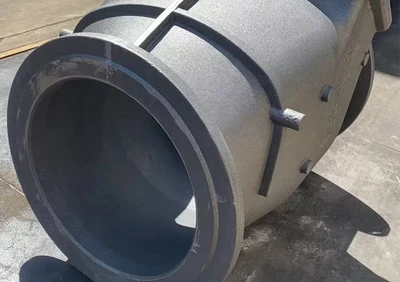 Pump Shell-Ductile IronFebruary 27, 2025This is a great ductile iron part named pump shell used for pump industry area.Balasen designed advanced pouring system to feed and float into the mold cavity.We have opened pouring system deployment,...viewThe Aluminum Shift: How China’s NEV Boom Is Transforming Auto ComponentsJune 20, 2025In China’s booming new energy vehicle (NEV) market, a pivotal transformation is reshaping automotive manufacturing: the widespread shift from cast iron to aluminum castings. As NEVs lead sales and gr...view
 Quality of Cast Stainless SteelNovember 27, 2025Stainless steel casting is a highly regarded manufacturing process used to create intricate and durable components. This process is crucial in industries where strength, corrosion resistance, and the ...view
 +86-18816569813
  EN
EN