Create a sustainable future
Choosing a metal casting foundry is a technical sourcing decision, not simply a comparison of quoted unit prices. A supplier may offer the requested alloy yet lack experience with the part's wall thickness, internal cores, heat treatment, machining datums or inspection level. Another supplier may have capable equipment but weak traceability, unclear subcontract control or no reliable method for managing drawing revisions.
The right casting partner should be able to explain how the component will be made, where manufacturing risk exists, how conformity will be demonstrated and which requirements still need clarification. This guide provides a practical framework for casting supplier evaluation, quotation comparison, technical auditing and RFQ preparation.
Supplier selection becomes unreliable when every foundry receives different information. Before requesting quotations, create one controlled RFQ package containing the latest drawing, model, material specification, quantity, machining scope, inspection requirements and delivery condition. Identify which requirements are mandatory and which are open to supplier proposals.
The RFQ should also explain the component's function without disclosing unnecessary proprietary information. A foundry needs to know whether the part is pressure retaining, impact loaded, wear critical, exposed to corrosion or dependent on tight alignment between several machined features. This context allows meaningful design-for-manufacturing feedback.
Avoid requesting a quotation using only a photograph, approximate weight and general material name such as “stainless steel” or “alloy steel.” Those details do not define grade, heat treatment, acceptance standard or finished condition, so quoted prices will not be technically comparable.
Confirm that the supplier operates or controls the molding route required by the design. Ask why it recommends sand casting, shell molding, investment casting or another process. A capable supplier should discuss geometry, quantity, tooling, cores, dimensional control and cost trade-offs rather than naming a process without explanation.
Ask for recent experience with the exact material family and comparable section thickness. Melting a grade once is not the same as controlling it repeatedly. Review charge control, chemistry verification, treatment practice, heat treatment and the test samples required by the material specification.
Verify casting weight, overall dimensions, ladle and furnace suitability, mold handling, heat-treatment capacity and machining envelope. A project at the extreme edge of a supplier's equipment range may carry more scheduling and quality risk than a similar part comfortably inside its normal production range.
Look for specific comments on wall transitions, feeding, shrinkage risk, draft, fillets, machining stock and datum strategy. A useful DFM review distinguishes mandatory drawing requirements from proposed casting changes and records customer approval before implementation.
Clarify who designs, owns, stores and maintains patterns, dies and core boxes. Ask how tooling revisions are identified and how obsolete tooling is prevented from returning to production. Complex internal passages require equally careful core making, assembly, venting and removal.
Determine which operations are performed internally and which are subcontracted. Review furnace records, heat identification, temperature monitoring and heat-treatment charts where required. Subcontracting is not automatically a problem, but the foundry should define qualification, traceability and acceptance controls.
If finished parts are required, confirm machine envelope, fixture strategy, datum transfer, gauge availability and dimensional reporting. Integrated casting and custom machining can reduce coordination, but only when responsibility and acceptance criteria are clearly defined.
Review certificate scope and validity, but also examine how the system works on actual orders. ISO 9001 provides requirements for a quality management system; certification alone does not prove that a particular part or process meets your technical specification.
Ask how heat numbers, test samples, heat-treatment lots, inspection reports and finished castings are connected. Marking methods must remain readable through cleaning, heat treatment, machining and coating when traceability is contractually required.
Confirm equipment, procedures, personnel qualification and report format for visual, dimensional, surface and volumetric examinations. ISO 9712 defines qualification and certification requirements for personnel performing specified industrial NDT methods.
Agree on tooling approval, sample quantity, first-article documentation and production release. The supplier should request approval before changing material source, tooling, foundry location, heat treatment, machining route or other controlled conditions when the contract requires change notification.
Evaluate the realism of the proposed tooling, sample and production schedule. Ask who owns technical communication, how open actions are tracked and when delays are escalated. Accurate early warnings are more valuable than an attractive lead time that cannot be maintained.
Statements such as “strict quality control” or “advanced inspection” are not enough for supplier approval. Request examples of the records that will accompany your order and confirm that they match the purchase specification. For steel pressure-containing castings, ASTM A703/A703M provides common requirements that apply with the referenced individual specifications unless otherwise stated. For general industrial steel and alloy castings, ASTM A781/A781M provides another framework of common requirements.
These standards do not automatically apply to every order. The RFQ must state the material specification, general-requirements specification, selected supplementary requirements and any project-specific acceptance criteria. A foundry should identify conflicts or missing requirements before accepting the order.
| Evidence to Review | What to Verify | Common Procurement Risk |
|---|---|---|
| Quality certificate | Legal entity, site address, scope, issuing body and validity | The certificate belongs to a different site or does not cover the supplied activity. |
| Material certificate | Heat number, grade, chemistry, mechanical properties and applicable standard | The report cannot be linked to the delivered castings or omits required results. |
| Heat-treatment record | Part or lot identity, cycle, furnace identification and acceptance review | A subcontracted operation is performed without retained traceability or review. |
| Dimensional report | Drawing revision, inspection method, actual results and instrument identification | The report only marks dimensions as “OK” without actual values where values were required. |
| NDT report | Procedure, personnel, equipment, examination zones, acceptance criteria and result | The method is listed but the inspected zones and severity level are undefined. |
| Nonconformance record | Problem description, containment, disposition, authorization and corrective action | Repair or deviation is performed without customer approval when approval was required. |
A low quotation may exclude items that another supplier has included. Before comparing totals, normalize the commercial and technical scope. If a line item is unclear, ask the supplier to confirm it in writing instead of assuming it is included.
| Quotation Element | Questions to Ask | Why It Changes the Price |
|---|---|---|
| Tooling | What tooling is included, who owns it, and what is its expected maintenance arrangement? | Patterns, dies, core boxes, fixtures and gauges may be quoted separately. |
| Supplied condition | Is the price for raw, blasted, heat-treated, machined, coated or assembled parts? | Different finishing scopes can make unit prices appear misleadingly far apart. |
| Inspection | Which tests, sampling levels, reports and third-party activities are included? | RT, UT, mechanical tests and witnessed inspection can materially affect cost and timing. |
| Samples | How many samples and approval rounds are included? | Additional trials may require new production, machining and inspection. |
| Packaging and delivery | Which Incoterm, destination, preservation and packaging method apply? | Freight, export packing and corrosion protection may be excluded from the base price. |
| Validity and assumptions | What material, exchange-rate, quantity or scrap assumptions limit the quotation? | A quote may change if the actual order differs from its stated assumptions. |
Quotes a complex casting without requesting a drawing, material standard or quantity.
Accepts every tolerance and NDT requirement without technical questions.
Cannot explain which operations are subcontracted.
Provides certificates that cannot be matched to its legal entity or production site.
Uses “equivalent material” without identifying the exact standard and obtaining approval.
Cannot connect heat numbers, test results and delivered castings.
Promises unusually short tooling and sample lead times without a production plan.
Refuses to define repair, deviation or change-notification rules.
Provides photographs but no actual inspection records or comparable project evidence.
Changes the quotation scope after award because requirements were not reviewed initially.
Weighting should reflect project risk. A safety-critical pressure casting should assign more weight to material control, traceability and inspection, while a high-volume commercial housing may place additional weight on repeatability, capacity and delivery. The following is a starting point rather than a universal rule.
| Evaluation Category | Suggested Weight | Minimum Evidence |
|---|---|---|
| Process and material fit | 20% | Capability review and relevant production experience |
| Engineering and DFM | 15% | Documented technical review and risk comments |
| Quality and traceability | 25% | Sample records, traceability demonstration and valid system documentation |
| Machining and inspection | 15% | Equipment fit, procedures, personnel and report examples |
| Capacity and delivery | 10% | Realistic tooling, sample and production plan |
| Commercial transparency | 10% | Clear scope, assumptions, tooling ownership and payment terms |
| Communication | 5% | Named contacts, response process and open-action tracking |
A supplier should still be disqualified if it fails a mandatory requirement, even when its weighted total is high. Examples include an unavailable material process, missing traceability, unapproved subcontracting or inability to meet a required inspection standard.
Include the following information whenever it applies to your project:
Controlled 2D drawing and 3D model
Drawing revision and change history
Material standard, grade and any approved alternatives
Applicable general requirements and supplementary requirements
Prototype quantity, batch quantity and annual demand
Finished part weight, estimated casting weight and overall dimensions
Required casting process, or permission for the foundry to propose one
Heat treatment and required material condition
Machining scope, datums, tolerances and surface finish
Critical characteristics and special process controls
Visual, dimensional, mechanical, metallurgical and NDT requirements
Inspection zones, sampling frequency, severity level and acceptance criteria
Pressure or functional test requirements and responsible party
First-article, sample and production-approval requirements
Material certificates and required quality records
Marking, traceability, coating, preservation and packaging
Customer, third-party or regulatory inspection points
Required delivery date, destination and commercial terms
Tooling ownership, storage and maintenance expectations
Deviation, repair and change-notification requirements
A capable supplier should respond with technical questions, identified assumptions and a proposed manufacturing scope. Balasen provides multiple custom metal casting capabilities, including sand casting, investment casting, material options and machining support. Company and quality information is available on the Balasen company profile page.
The most important factor is technical fit with the actual component. The foundry must be able to control the required material, geometry, section thickness, production quantity, machining and inspection level. Price, location and capacity matter only after mandatory technical requirements are satisfied.
No. It indicates that a quality management system has been assessed within a defined scope, but it does not prove that a specific casting meets your drawing or material specification. Review certificate scope, process capability, traceability and actual order records as well.
Not until the scope has been normalized. Confirm tooling, material, heat treatment, machining, inspection, reports, packaging and delivery terms. A low unit price may exclude requirements that another supplier has included.
Send the controlled drawing, 3D model when available, material specification, quantity, machining requirements, inspection criteria, required records and delivery condition. Identify mandatory requirements and any areas where supplier proposals are allowed.
Select a sample order and trace its heat number through melting records, test samples, heat treatment, inspection reports, machining and final shipment. The supplier should demonstrate an unbroken link between records and the delivered castings.
Send Balasen your drawing, material specification, estimated quantity, machining scope and inspection requirements. We will review the available information, identify open technical points and discuss an appropriate manufacturing route.
Submit Your Casting RFQ Gray Iron vs. Ductile Iron Castings: Properties, Machinability, Cost and ApplicationsAugust 24, 2026Gray iron and ductile iron are both iron-carbon casting materials, but they do not behave the same way in service. The key difference is the shape of the graphite inside the metal. Gray iron contains ...view
 Manufacturing Process of Ductile IronNovember 27, 2025Ductile iron, known for its excellent strength and ductility, is a variant of graphite cast iron typically used in engineering applications requiring a high tensile strength. The process of manufactur...view
 2A Great Steel Casting and Machining Part Used for Industrial AreaFebruary 27, 2025This is a special steel casting and machining part produced by balasen company recently.The material is 42CrMo4. This is to export to Europe customer.material quality.Then we make a full machining fo...viewIs Lost Foam Casting Better than Sand Casting?March 27, 2026When comparing casting methods, manufacturers often weigh precision, cost, and production efficiency. Traditional sand casting has long been valued for its flexibility and relatively low tooling costs...view
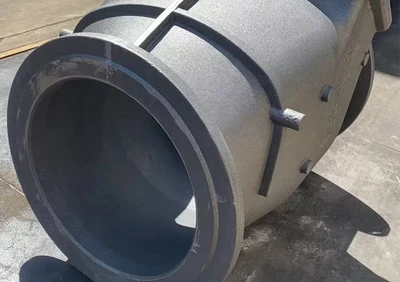 Pump Shell-Ductile IronFebruary 27, 2025This is a great ductile iron part named pump shell used for pump industry area.Balasen designed advanced pouring system to feed and float into the mold cavity.We have opened pouring system deployment,...view
 Quality of Cast Stainless SteelNovember 27, 2025Stainless steel casting is a highly regarded manufacturing process used to create intricate and durable components. This process is crucial in industries where strength, corrosion resistance, and the ...view
 +86-18816569813
  EN
EN