Create a sustainable future

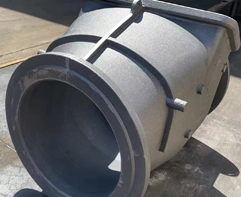
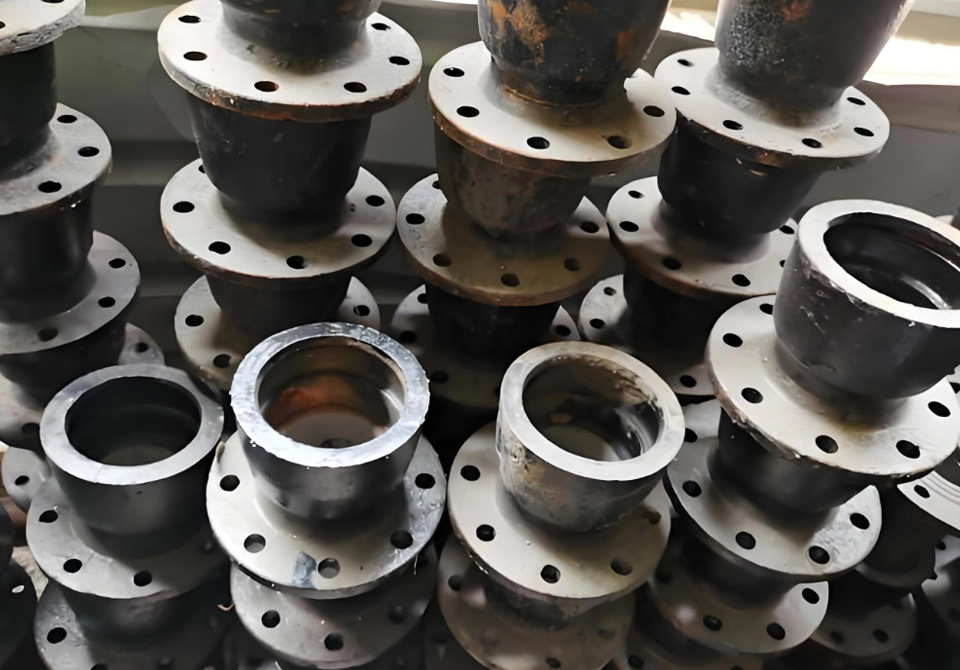
Ductile iron castings are high-performance casting products made from ductile iron as the base material and subjected to spheroidization treatment (adding magnesium/rare earth). Its graphite is spherical in shape, combining the casting advantages of cast iron with mechanical properties similar to steel, with high strength, good toughness, wear resistance, and impact resistance. Widely used in pipelines, automotive components (crankshafts, gears), construction machinery, wind power equipment, and heavy structural components. The production process requires precise control of spheroidization rate and cooling speed, with significant cost-effectiveness. It can replace some cast steel parts and is suitable for complex shapes and high load scenarios. It is the core basic material in the industrial field.
High strength and impact resistance
Excellent tensile strength (500-900 MPa) and elongation (2-25%), suitable for heavy-duty and high-frequency impact conditions (such as mining machinery and large gears).
Ability to cast complex structures
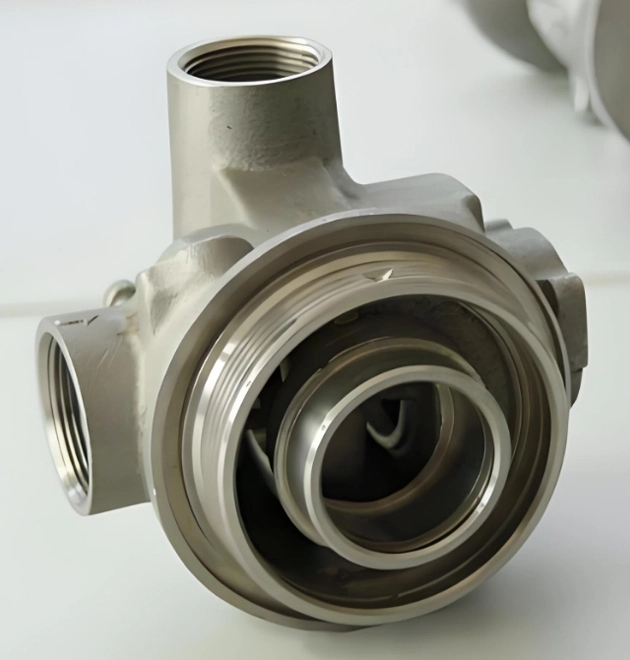
High fluidity supports the integrated molding of thin-walled or irregular parts, reducing welding/assembly costs (such as engineering machinery shells and valve bodies).
Outstanding cost-effectiveness
The performance is similar to cast steel, but the casting energy consumption is 30% -50% lower, the material utilization rate is high, and it is suitable for mass production.
Wear resistance and fatigue resistance
Spherical graphite reduces stress concentration and extends the lifespan of components such as rollers and excavator bucket teeth.
Shock absorption and noise reduction
Graphite structure absorbs vibrations better than steel and is suitable for high-precision transmission system bases.
Lightweight potential
By optimizing the design, some forged steel parts can be replaced, reducing equipment weight and energy consumption.
Ductile iron (nodular iron) has excellent mechanical properties and good processability:
Mechanical properties:
Balanced tensile strength (400-900 MPa) and elongation (2-25%), high fatigue strength, better wear resistance than gray cast iron, hardness (140-300 HB) can be adjusted through heat treatment (normalizing, quenching).
Processing characteristics:
Machinability: Graphite balls have a chip breaking effect and low tool wear, but the cutting speed needs to be controlled (hard alloy tools are recommended);
Heat treatment adaptability: Annealing can improve toughness, surface quenching enhances wear resistance;
Weldability: Preheat and use specialized welding materials to avoid cracks.
Attention:
Avoid local overheating causing graphite distortion, and rust prevention treatment is required after processing. Ductile iron is widely used in high-precision and high load components such as gears and crankshafts due to its high strength, toughness, and ease of processing.
Ductile cast iron, spheroidal graphite iron, spheroidal graphite cast iron, nodular cast iron, or SG iron, Ductile iron is an alloy of iron and carbon in graphite form; ductile iron is composed of 3.2 to 3.6% Carbon, 2.2 to 2.8% Silicon, 0.1 to 0.2% Manganese, 0.03 to 0.04% Magnesium, 0.005 to 0.04% Phosphorus, 0.005 to 0.02% Sulfur, Less than 0.4% Copper and Remaining (Around 94%) Iron:
Ferritic Ductile Iron: Ferritic ductile iron consists of graphite nodules in a ferrite matrix. This type of ductile iron provides good ductility, and impact resistance, with tensile and yield strength comparable to low-carbon steel.
Ferritic Pearlitic Ductile Iron: The microstructure contains the graphite spheroids in a matrix containing both ferrite and pearlite. Ferritic Pearlitic Ductile Iron exhibits properties intermediate between ferritic and pearlitic grades. They have good machinability and low production costs.
Pearlitic Ductile Iron: Pearlite matrix in the microstructural characterization of this category of ductile iron. They provide good machinability, high strength, good wear resistance, moderate ductility, and impact resistance, making them widely used by mining casting manufacturers for durable equipment components.
Please upload files like drawings, material specifications, quantities, and shipping destination.
 +86-18816569813
  EN
EN