Create a sustainable future

When it comes to manufacturing durable metal components for industries like agriculture, resin sand casting is a go-to method for producing high-quality, intricate parts. Known for its strength and precision, this process is widely used by foundries like Balasen in China to create components for agricultural machinery casting. If you’re curious about how this technique works or why it’s preferred for certain applications, this blog breaks down the process, its benefits, and its role in modern manufacturing, with a focus on furan resin sand casting.
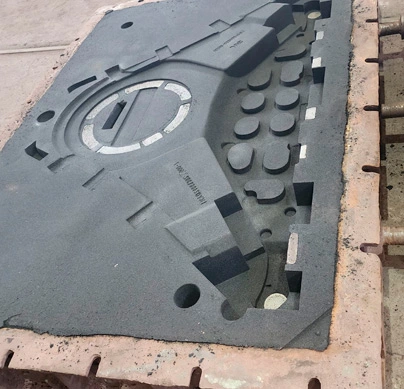
Resin sand casting, also known as furan or phenolic resin sand casting, is a foundry process that uses a mixture of sand and a chemical resin binder to form rigid molds. Unlike green sand casting, which relies on clay and water, resin sand casting employs a resin binder (typically furan or phenolic) and a hardener to create a strong, durable mold capable of producing complex geometries with tight tolerances (CT7–CT10, per ISO 8062).
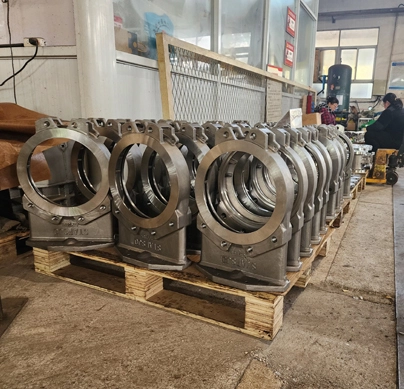
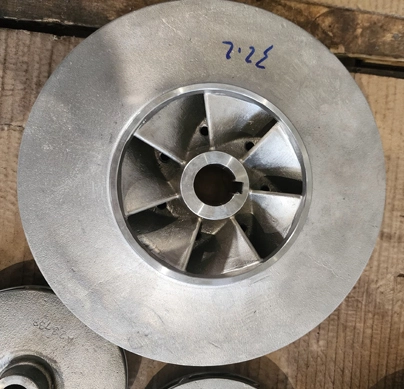
At Balasen, a leading provider of resin sand casting in China, this method is used to manufacture parts for carbon steel casting China, alloy steel casting China, and manganese steel casting foundry applications. The process is ideal for medium to large castings, such as gearbox housings or pump bodies, due to its excellent surface finish (Ra 12.5–50 μm) and dimensional accuracy.
| Feature | Description |
|---|---|
| Binder | Furan or phenolic resin with hardener |
| Tolerances | CT7–CT10 |
| Surface Finish | Ra 12.5–50 μm |
| Applications | Gearboxes, pump bodies, agricultural machinery |
The resin sand casting process involves several steps to ensure precision and quality:
Pattern Creation: A pattern, typically made of wood, metal, or plastic, is crafted to replicate the final part’s shape, including gating systems.
Sand Mixing: Silica sand is mixed with a resin binder (e.g., furan resin) and a catalyst to initiate curing. Balasen uses automated mixing systems for consistency.
Mold Formation: The resin-sand mixture is packed around the pattern in a mold box and allowed to cure, forming a rigid mold.
Pattern Removal: The pattern is removed, leaving a cavity in the mold. Cores, if needed, are inserted for internal features.
Pouring and Cooling: Molten metal, such as carbon steel or alloy steel, is poured into the mold. After cooling, the mold is broken away to reveal the casting.
Finishing: The casting undergoes cleaning, shot blasting, and machining to meet specifications.
This process is highly controlled at Balasen, ensuring high-quality agricultural machinery casting components that meet ISO 9001 standards. The resin’s curing time, typically 30–60 minutes, allows for efficient production compared to other methods.
Resin sand casting offers distinct advantages, making it a preferred choice for custom sand castings:
Superior Surface Finish: Compared to green sand casting, resin sand casting achieves smoother surfaces, reducing machining costs.
High Dimensional Accuracy: Tighter tolerances (CT7–CT10) make it suitable for precision parts like gearbox covers or hydraulic components.
Strength and Durability: The rigid resin-bonded mold withstands high pouring pressures, ideal for manganese steel casting foundry applications.
Complex Geometries: The process supports intricate designs, surpassing the limitations of custom sand castings in some cases.
A 2023 industry analysis indicated that resin sand casting can reduce finishing costs by up to 15% compared to green sand casting due to its smoother surface and tighter tolerances, benefiting industries like agriculture and mining.
| Benefit | Impact |
|---|---|
| Cost Savings | 10–15% reduction in finishing costs |
| Precision | CT7–CT10 tolerances |
| Mold Strength | Supports heavy, complex castings |
| Versatility | Suitable for ferrous and non-ferrous metals |
Resin sand casting is widely used by Balasen for agricultural machinery casting, producing components like tractor gearbox housings, plow frames, and pump bodies. The process’s ability to handle carbon steel casting China and alloy steel casting China ensures parts with high strength and wear resistance, critical for harsh agricultural environments.
Beyond agriculture, resin sand casting is employed in industries like construction and mining for parts such as valve bodies and crusher components. Its capacity to produce castings from 5 kg to several tons makes it versatile for various applications, supported by Balasen’s advanced foundry capabilities in Xuzhou, Jiangsu.
Q1: What is the composition of resin sand?
Resin sand consists of silica sand mixed with a resin binder (e.g., furan or phenolic) and a hardener, typically in a ratio of 1–2% resin to sand by weight.
Q2: What are the differences between green sand casting and resin sand casting?
Resin sand casting uses a chemical binder for stronger molds and better surface finish (Ra 12.5–50 μm), while green sand casting uses clay and water, offering lower precision (CT8–CT12) but lower costs.
Q3: Can you use sand with resin?
Yes, furan resin sand casting combines silica sand with a resin binder to create rigid molds for high-quality castings.
Q4: How intricate can resin sand casting be?
Resin sand casting supports complex geometries, such as internal cavities for gearbox housings, with tolerances of CT7–CT10, making it ideal for agricultural machinery casting.
[1]. International Organization for Standardization. (2018). "ISO 8062: Geometrical product specifications — Dimensional and geometrical tolerances for moulded and cast parts."
[2]. Wikipedia. (2023). "Sand casting." https://en.wikipedia.org/wiki/Sand_casting
[3]. Balasen Equipment Co., Ltd. (2023). "Resin Sand Casting Services." https://www.balasen.com/products/resin-sand-casting/
[4]. Li, X., et al. (2021). "Optimization of resin sand casting for large-scale components." Journal of Materials Processing Technology, 298, 117245.
 The Evolution of Modern Metal Casting: From Traditional Techniques to Smart FoundriesNovember 12, 2025In recent decades, the global metal casting industry has witnessed an impressive technological transformation. Once reliant on manual labor and experience-based intuition, foundries today are becoming...view
 How Do Foundries Choose the Right Casting Process for Different Metals?November 12, 2025Choosing the right casting process depends on a combination of material properties, cost considerations, and design complexity. Foundries make this decision based on the metal’s melting temperature, ...view
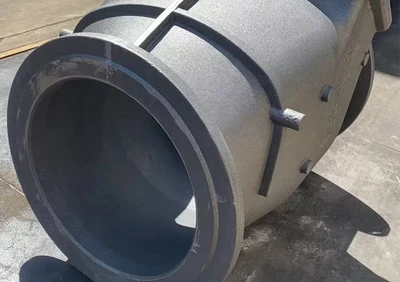 Pump Shell-Ductile IronFebruary 27, 2025This is a great ductile iron part named pump shell used for pump industry area.Balasen designed advanced pouring system to feed and float into the mold cavity.We have opened pouring system deployment,...view
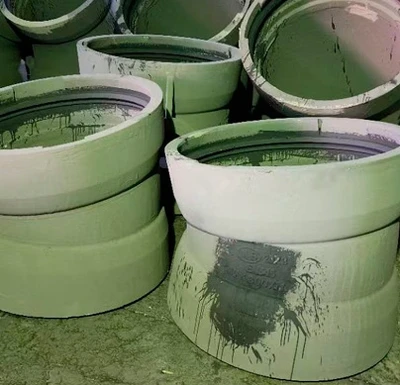 Ductile Iron Corrosion Protection: Tips to Prolong Component LifeJune 20, 2025Ductile iron is widely used in automotive, pipeline, and heavy machinery applications due to its high strength, excellent ductility, and cost-effectiveness. However, many users find that improper use ...view
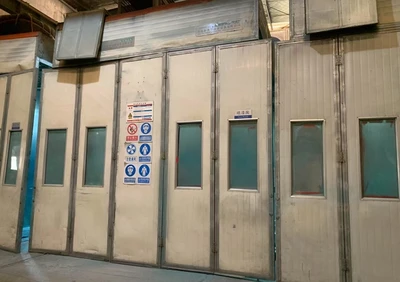 Balasen Painting CapabilityFebruary 27, 2025Balasen has adequate painting equipment and capability; we can do maximum three layers of coating per client requirement. it includes primer, intermediate and final coat. The nominal thickness is 320 ...view
 Is Lost Foam Casting Better Than Sand Casting for Agricultural Machinery?June 20, 2025When manufacturing components for agricultural machinery casting, choosing the right casting method is critical for balancing cost, quality, and performance. Lost foam casting and custom sand castings...view
 +86-18816569813
  EN
EN